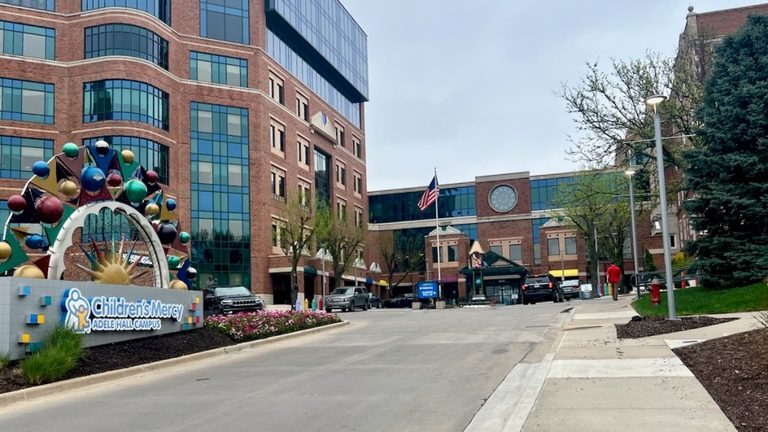
In January, roughly 400 Kansas City children will lose access to Children’s Mercy Hospital and its affiliated pediatric practices through Affordable Care Act (ACA) marketplace plans. Families like Emmalyn Case, whose three children are ages 9, 6 and 4, are already feeling the impact.
“It’s really scary,” Case said after learning the hospital would not be in‑network for any ACA plan next year. Her children have only needed occasional specialist visits, but their trusted pediatrician works at a Children’s Mercy‑affiliated practice. Losing that connection would be a major blow.
Why the network gap occurred
Every year health‑care providers negotiate reimbursement rates with insurance carriers. Hospitals seek rates that cover the cost of care, while insurers look for discounts. When the parties cannot agree, patients often bear the consequences.
Wil Franklin, CEO of KC Care, a safety‑net clinic, explained, “A lot of the issues around affordability are driven not by real factors, but more factors of contractual leverage.” The disagreement between Children’s Mercy and ACA insurers appears to be a classic case of mismatched expectations.
Insurers cite cost concerns
The Missouri Insurance Coalition, representing ACA carriers, said Children’s Mercy’s prices are simply too high. As a nonprofit hospital, the coalition argued, reimbursement should reflect the reasonable cost of providing care, not the lack of alternatives.
“That responsibility carries extra weight where a single facility is the only realistic option for specialized care across a large region,” the statement added.
Impact on families
Parents like Kasey Jackson, whose son is undergoing a second round of cancer treatment at Children’s Mercy, have taken to social media to plead for a solution. “You have to stop this, Children’s Mercy. You have to do something. You cannot let this happen,” Jackson said in a tearful Instagram video that went viral locally.
For many families, ACA plans have been a safety net when employer‑sponsored insurance is unavailable. The loss of in‑network status could force them to seek more expensive commercial plans or pay out‑of‑pocket for pediatric specialty services.
Broader market forces
Children’s Mercy reported $122 million in operating income for 2025 and is amid a $1.7 billion expansion of its downtown Kansas City campus, plus a $152 million project at its Overland Park location. A hospital spokesperson noted that ACA plans in Wichita and Springfield are not affected.
Nationally, ACA marketplace plans often reimburse at lower rates than commercial group plans. A 2022 University of Southern California study found marketplace plans paid about 89 % of what commercial plans paid for inpatient and outpatient procedures. This disparity has contributed to insurers exiting the marketplace; 11 carriers have left for 2027.
Federal enhanced tax credits that made marketplace plans affordable during the COVID‑19 pandemic expired at the start of this year, causing enrollment to drop more than 20 %. Healthier, lower‑cost individuals left the risk pool, leaving a higher‑cost population that insurers find less attractive.
What’s next?
Only one ACA carrier, Medica, included Children’s Mercy in a plan last year, and it is now exiting the Kansas and Kansas City‑area markets. Other major insurers, such as Aetna CVS Health, have already withdrawn from the Missouri and Kansas ACA markets.
State regulators have limited authority over federal marketplace plans, which must meet basic network standards but lack strong oversight on reimbursement negotiations.
For families like the Cases, the loss of in‑network status underscores the need for greater transparency and fairness in provider‑insurer relations. Insurance broker Tim Becks of Westwood warned, “There needs to be an overhaul of provider‑insurance company relations. That is something health reform did not address.”
Original reporting: The Beacon (Kansas City) — read the source article.