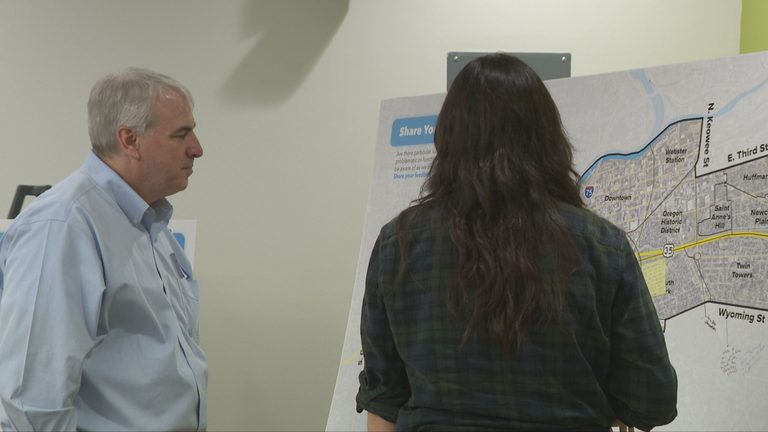
Dayton’s municipal leaders kicked off the first public‑input session for the ambitious Revive35 redevelopment of US‑35, a corridor that runs through the heart of the Gem City. The project, estimated at close to $100 million, is slated to unfold over several years and aims to improve traffic flow, enhance safety and reconnect neighborhoods that have been divided by the highway.
Community voices shape the plan
When the city announced the workshop, longtime resident Kara Callahan was quick to participate. “I care a lot about the way we get to and from work, and I personally bike‑commute,” Callahan said. “Safe infrastructure topped my list.” She added that she wanted her voice heard and even placed sticky notes on the feedback forms the city provided.
Callahan’s modest expectations reflect a broader sentiment among participants. “My goals are very low, personally, and the vision they’re casting seems much higher than what I would have thought necessary,” she remarked, underscoring the importance of aligning the project with everyday needs.
City officials outline challenges and goals
City Engineer David Escobar explained why the corridor warrants such a large investment. “While US‑35 strengthens the Gem City, it also has had some negative impacts,” he said. “It divided the neighborhoods; it cut off roadways. It created some separation and some negative aspects for our neighborhoods.”
Escobar and the Revive35 team presented demographic data for the study area, noting that more than 30 percent of households live in poverty and half of the residents rent their homes. The figures highlight the need for a redevelopment that benefits all community members, not just commuters.
What the Revive35 plan includes
The city’s presentation outlined several key components under consideration:
- Improved pedestrian and bicycle pathways to encourage active transportation.
- Noise‑mitigation measures such as sound barriers and landscaped buffers.
- Reconstruction of intersecting roadways to restore connectivity between divided neighborhoods.
- Upgraded lighting and safety features to address resident concerns about crime and accidents.
These elements are part of a four‑phase process, with the current workshop representing phase one. Subsequent phases will refine design details, secure funding and begin construction.
Looking to other cities for guidance
The Revive35 team said it is studying similar projects in other municipalities to adopt best practices. By learning from peers, Dayton hopes to avoid costly missteps and deliver a corridor that serves both local families and regional commuters.
Next steps and how to stay involved
City officials emphasized that resident feedback will directly influence the next design iterations. “These forms will be critical to moving the plan forward,” a spokesperson said. Residents can continue to submit comments online or attend future workshops scheduled throughout the coming months.
As Dayton embarks on this transformative infrastructure effort, the partnership between city leaders and everyday citizens underscores a shared commitment to safer streets, stronger neighborhoods and a brighter future for the Gem City.
Original reporting: WHIO-TV Dayton (local) — read the source article.