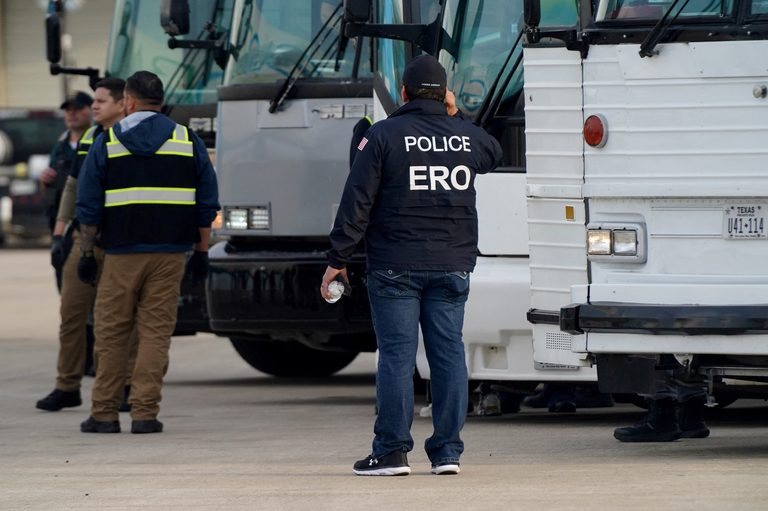
In a decisive one‑sentence order on Tuesday, the U.S. Supreme Court refused to grant relief to a coalition of cities and a nonprofit that sought to protect a Biden‑era immigration rule. The ruling leaves intact the Texas‑led restriction that prevents immigration judges from pausing deportation proceedings, even for immigrants who qualify for legal status through marriage to a U.S. citizen or victim‑of‑crime visas.
Background and Texas’ Challenge
On June 22, Texas Attorney General Ken Paxton filed a lawsuit in the Northern District of Texas, Wichita Falls, asserting that the 2024 rule revived by the Biden administration effectively granted “indefinite amnesty to aliens illegally present in this country.” The lawsuit argues that the rule undermines public safety by allowing illegal immigrants who are crime victims to avoid cooperation with law‑enforcement agencies.
Trump Administration’s Position
When the case first reached the district court, U.S. District Judge Reed O’Connor ruled in favor of Texas on the same day the Department of Justice, representing the Trump administration, filed a brief supporting Paxton’s position. The brief emphasized that the rule conflicted with the Constitution’s authority over immigration and threatened the rule of law that protects American communities.
Who Opposed the Rule?
The plaintiffs challenging the district‑court decision included three cities—Baltimore, Maryland; New Haven, Connecticut; and Columbus, Ohio—along with Centro Legal de la Raza, a nonprofit based in Oakland, California. They argued that Congress had authorized the rule, allowing judges to halt deportations for immigrants with pending applications. Their concerns focused on two points: (1) crime victims who are illegal immigrants might stop assisting police if they face deportation, and (2) local jurisdictions could lose tax revenue when residents are removed.
Supreme Court’s Decision
The Supreme Court’s brief denial of the plaintiffs’ request does not address the merits of the case; it simply leaves the lower‑court ruling in place. The case may return to the district court to determine whether the cities have standing to intervene, or the plaintiffs could ask the high court to hear the matter on a full briefing schedule.
Implications for Texas and the Nation
By maintaining the restriction, the decision aligns with the Trump administration’s longstanding emphasis on enforcing immigration laws and protecting communities from illegal entry. Supporters argue that the rule reinforces the rule of law and ensures that victims of crime are not incentivized to remain silent out of fear of deportation.
Critics, however, contend that the rule could deter cooperation with law‑enforcement and harm public‑safety efforts. They also warn that the policy may have broader economic impacts on cities that rely on immigrant labor and tax contributions.
What’s Next?
Legal experts note that the Supreme Court’s refusal to intervene is not a final judgment on the policy’s constitutionality. The case could continue to move through the federal courts, potentially reaching the high court again if the parties seek a full hearing.
For Texas residents, the ruling means that immigration judges will continue to process deportation cases without pause, even when an individual has a pending application for legal status. The decision reflects a broader federal‑state tension over immigration enforcement that has been a hallmark of the Trump administration’s approach to securing the border and upholding the Constitution.
Original reporting: Texas Tribune (HLL/CB) — read the source article.