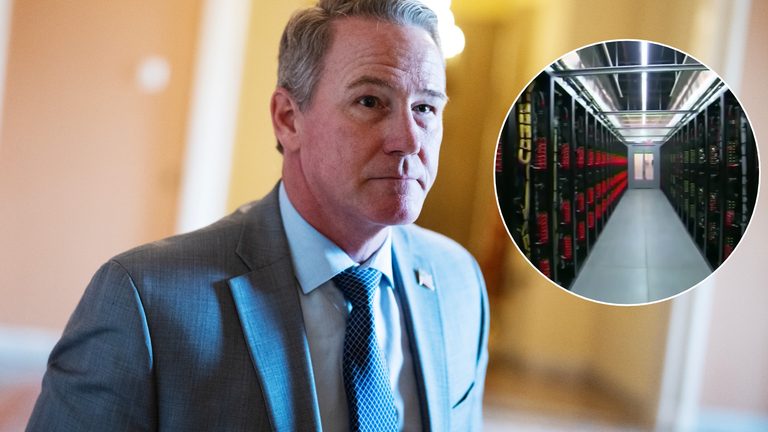
As Ohio voters head to the polls, political ads have zeroed in on U.S. Sen. Jon Husted’s role in attracting data‑center investment to the state. The ads claim Husted has “sold us out” by giving AI data centers billions in taxpayer money. However, a PolitiFact review rates those claims as “mostly true,” confirming that Husted’s record on data‑center incentives is grounded in documented actions.
Tax incentives approved during Husted’s tenure as lieutenant governor
While serving as Ohio’s lieutenant governor, Husted oversaw the Ohio Tax Authority, which approved multiple tax incentives for companies building data centers. The Ohio Chamber of Commerce Research Foundation’s 2025 economic impact study shows that between 2017 and 2024 the state provided roughly $2.5 billion in tax incentives for data‑center development, placing Ohio among the nation’s top data‑center markets.
Husted and Governor Mike DeWine publicly announced plans for Aligned Data Centers, Vantage Data Centers, Microsoft, and Amazon on at least four separate occasions. In June 2023, Husted praised a multi‑billion‑dollar Amazon agreement, saying, “This enormous capital investment further solidifies Ohio as the tech center of the Midwest and positions us for a bright future as cloud computing and artificial intelligence are more integrated into the economy and our everyday lives.”
Federal actions and the One Big Beautiful Bill
Since becoming an appointed U.S. senator, Husted voted for the “One Big Beautiful Bill,” which passed and included federal tax provisions encouraging large capital investments in rural opportunity zones. Those provisions complement the state‑level incentives and help explain why data‑center projects have continued to move forward under his watch.
Energy‑cost legislation and its outcome
Husted also introduced the “Ratepayer Protection Act,” a measure that would have required large electricity users to cover their own energy costs. Although the bill failed in the Senate, a similar version passed the House but did not become law. The effort reflects Husted’s concern for protecting Ohio ratepayers from bearing the indirect costs of massive data‑center power consumption.
What the ads omit
The political advertisements from “Duty and Country” and “Defend the Vote” focus on the headline‑grabbing claim that Husted is “the face of AI data centers” and that he is handing out “billions of taxpayer money.” What they do not highlight is the PolitiFact assessment that the core of those claims—Husted’s involvement in approving tax incentives—is accurate, though the language used in the ads is deliberately sensational.
Furthermore, the ads ignore the broader economic impact. The Ohio Chamber’s study notes that the tax incentives have spurred job creation, increased state tax revenue from related services, and positioned Ohio as a competitive hub for cloud computing and artificial intelligence. Those benefits align with the administration’s goal of fostering a technology‑driven economy that serves Ohio families and communities.
Local perspective
For Ohio residents, the data‑center boom brings both opportunities and concerns. Supporters point to new high‑paying jobs and increased local spending, while some community members raise questions about housing affordability and environmental effects. Husted’s record shows he has been responsive to both economic development goals and the need for responsible oversight.
As the election season continues, voters will hear more about Husted’s data‑center record. The factual basis, as verified by PolitiFact, suggests that the criticism in the ads is rooted in genuine actions, even if the tone is hyperbolic. Ohioans can weigh the documented incentives against the broader impacts when deciding how to cast their ballots.
Original reporting: WLWT Cincinnati — read the source article.