Emma Avenue got its murals before murals were a civic strategy. The first large-scale pieces went up on the brick flanks of older commercial buildings sometime in the mid-2010s, commissioned through a loose partnership between the city and local arts advocates who had been watching the corridor slowly hollow out after decades of retail drift. Nobody called it a mural district then. They just painted the walls.
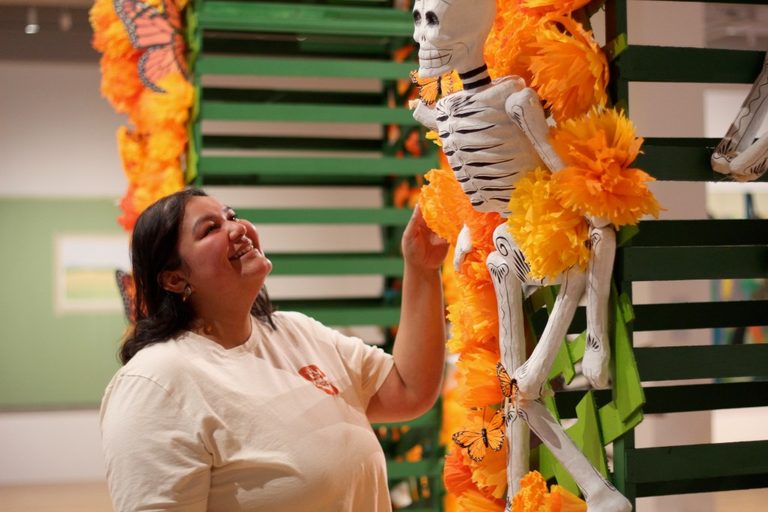
Today, walking the stretch of Emma between roughly Thompson Street and Gutensohn Road reveals something more considered — not a theme park version of street art, but a working-class avenue that has slowly layered color and image onto its own existing bones. The buildings are still mostly one- and two-story brick and cinderblock, some occupied by small businesses, others half-empty. The murals don’t pretend otherwise. Several acknowledge the area’s Latino community directly, with imagery drawn from Mexican folk tradition: sugar skull motifs, magenta bougainvillea, the bold geometric borders of Oaxacan textiles rendered at thirty-foot scale.
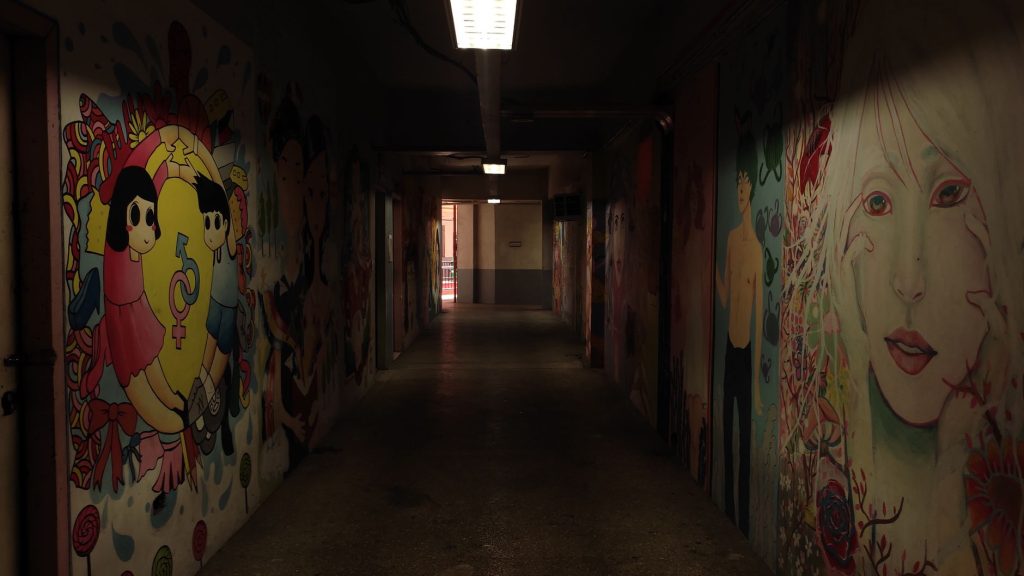
One piece in particular stops people mid-stride. A woman’s face occupies nearly the entire south wall of a commercial block near the 400s — painted in warm ochres and burnt sienna, wearing a floral crown, her expression somewhere between serene and defiant. The artist’s signature is small and easy to miss. The face is not. On a clear afternoon, when the light hits the wall from the west, the colors go almost luminous.
Other murals are more explicitly historical. One documents the Tontitown grape harvest tradition, a reference to the Italian immigrant community that settled northwest Arkansas in the 1890s. Another, near the east end of the corridor, is abstract — interlocking shapes in teal and copper that look vaguely architectural, as if someone rendered a bird’s-eye view of a city that doesn’t exist yet. It’s one of the more quietly ambitious pieces on the avenue.
The corridor works best as a slow walk rather than a drive. Parking is easy — street spots are almost always available — and the sidewalks, while not particularly wide, are passable. Allow forty-five minutes to an hour if you intend to stop and actually look. Bring a phone with a decent camera; the light between 4 and 6 p.m. on a clear day is particularly good. There’s no admission, no guided tour, no gift shop. The corridor is just a public street with public art on it, which is exactly what makes it feel genuine.
Emma Avenue still has a working character — a tire shop here, a quinceañera dress boutique there, a taqueria whose parking lot fills at lunch. The murals exist alongside all of that without sanitizing it. A few pieces show their age, edges softening from sun and rain. No one seems to be in a hurry to restore them, which is either a resource problem or a philosophy, possibly both.
For anyone tracing how Springdale has been narrating itself visually over the last decade, Emma Avenue is the primary text. The story isn’t finished — there are still blank walls — and that, too, feels right.