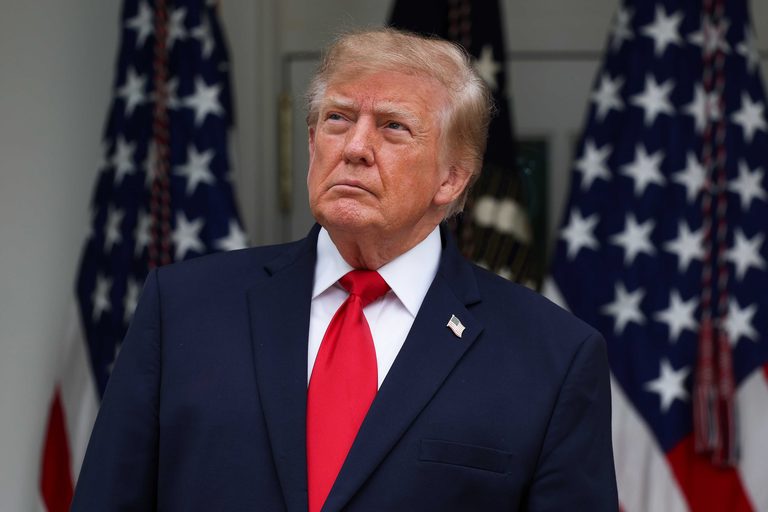
President Donald Trump told a campaign crowd in Perry, Georgia, that the United States is “making a fortune” from higher oil prices. He framed the surge as a win for national security and American prosperity, saying he would not shy away from the headline critics might write.
Administration’s view
A White House official confirmed that increased oil production and exports are strengthening the country’s economy and its security posture. The statement highlighted that oil tankers are now delivering more cargo to ports in Texas and Louisiana, supporting domestic producers rather than foreign adversaries.
Economic impact on producers and governments
According to an analysis by Oil & Gas Journal, 38 U.S. oil producers and refiners posted a combined $62.2 billion in profits in the second quarter of 2026—nearly three times the $22.3 billion recorded in the same period a year earlier. Their total revenue rose from $299.3 billion to $439.1 billion.
The Interior Department reported that energy production on federal lands and waters generated $7.53 billion for the U.S. Treasury in fiscal year 2026, more than $6.6 billion for state governments, and over $1 billion for conservation programs. In fiscal year 2025 the department distributed $5.01 billion to the Treasury and $4.07 billion to states, showing a clear upward trend in federal and state revenue from energy development.
Energy economist Ed Hirs of the University of Houston noted that higher prices are also benefitting government budgets, saying, “The federal government is gaining, as are some of the state governments with higher tax collections.” He added that the price environment can support jobs and local businesses in oil‑producing communities, and that investors holding energy stocks—often through retirement accounts—may see gains.
Consumer costs and expert criticism
Despite the reported gains, consumer prices are climbing sharply. Hearst Television’s Get the Facts team found gasoline prices have risen more than 50 % in 20 states since the conflict that began on Feb. 28. Brown University estimates Americans have spent roughly $143 billion more on gasoline and diesel than they would have without the war.
Higher diesel costs are also raising transportation and delivery expenses, which can push up grocery and other everyday prices. Rice University’s Baker Institute energy expert Abhi Rajendran cautioned that the overall effect is a drag on the economy, describing the situation as a “consumption tax” that outweighs the production benefits.
Looking ahead
The White House maintains that stronger domestic energy production is a net benefit for the nation, though it has not quantified how much of the additional wealth reaches ordinary households. President Trump predicts gasoline prices will fall sharply once the war ends, while Hirs warned that global market disruptions could keep prices elevated for months even after hostilities cease.
As the debate continues, the administration’s message emphasizes national security and fiscal gains, while economists and consumer advocates stress the burden on everyday Americans at the pump.
Original reporting: KOAT Albuquerque — read the source article.