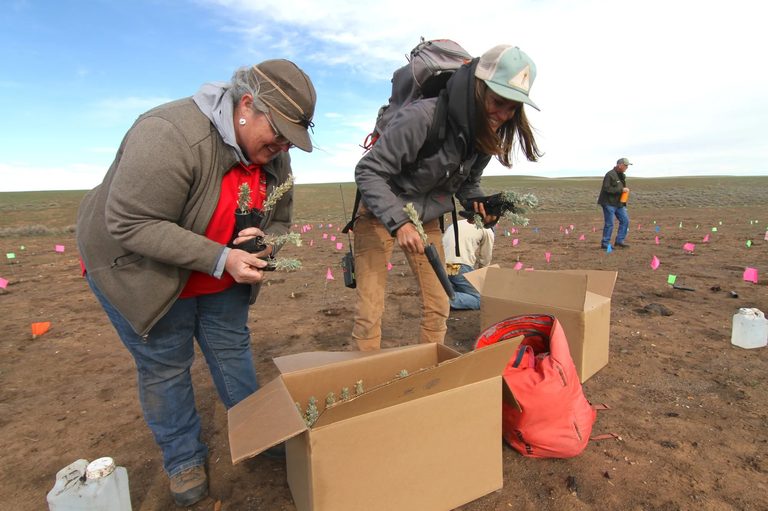
South Pass, WY – Terrestrial habitat biologist Amy Anderson praised a “huge, communitywide effort” as state and federal crews worked Thursday to replant sagebrush on the burned foothills of the Wind River Range. The Weiser Knoll Fire, which swept through 25 square miles of sagebrush and bitterbrush last August, left the area largely barren, threatening shrub‑dependent wildlife such as sage grouse.
Anderson, a Wyoming Game and Fish Department staffer, noted that recent rains and targeted irrigation have already coaxed native wheatgrass, prairie smoke and western yarrow into sprouting, giving the landscape a promising green hue. “We’re doing our best,” she said, “but it’s going to be a long road to get this back to serviceable habitat.”
Seedlings and teamwork
On Thursday, three crews – the Game and Fish Department, Wyoming State Forestry’s new Gannet Peak wildland firefighting team, and a Shoshone National Forest crew – planted nearly 2,000 sagebrush seedlings. The seedlings were placed in “islands” of several hundred plants each, targeting the hottest parts of the burn where natural regeneration is most inhibited.
Emma Freeland, a Bureau of Land Management biologist, supplied an unexpected surplus of 7,000 seedlings from the Wyoming Honor Farm, which donated the plants to the recovery effort. Volunteers and agency staff knelt in the soil, planting one seedling at a time while sharing observations and encouragement.
Addressing invasive cheatgrass
Anderson also helped secure a $2 million grant from the Wyoming Wildlife and Natural Resource Trust to treat the scar for destructive cheatgrass, an invasive grass that spreads quickly on disturbed soils. Cheatgrass thrives on the lower slopes of South Pass and can outcompete native shrubs, further endangering wildlife that rely on sagebrush for winter forage.
So far, the western flank of the fire scar shows a preponderance of native regrowth, which Anderson called “excellent.” Yet she emphasized that the loss of mature shrubs remains a critical concern: “The huge loss here was the shrubs. They were so productive, and fed a lot of wildlife in the winter.”
Long‑term outlook
The restoration effort is part of a broader, multi‑year plan to bring the sagebrush ecosystem back to health. While the Weiser Knoll Fire may be “small potatoes” compared with larger western wildfires, its impact on local flora and fauna is profound. Ongoing monitoring, additional planting, and cheatgrass treatment will be essential to reestablish a viable habitat for sage grouse lek sites and other wildlife.
Anderson remains cautiously optimistic. “It’s devastating,” she said, “but the community effort and the early signs of native growth give us hope that we can restore this landscape for future generations.”
Original reporting: Oil City News (Casper WY) — read the source article.