What is there to do on a Tuesday afternoon when Fayetteville’s coffee shops feel too small and the weather is too good to waste?
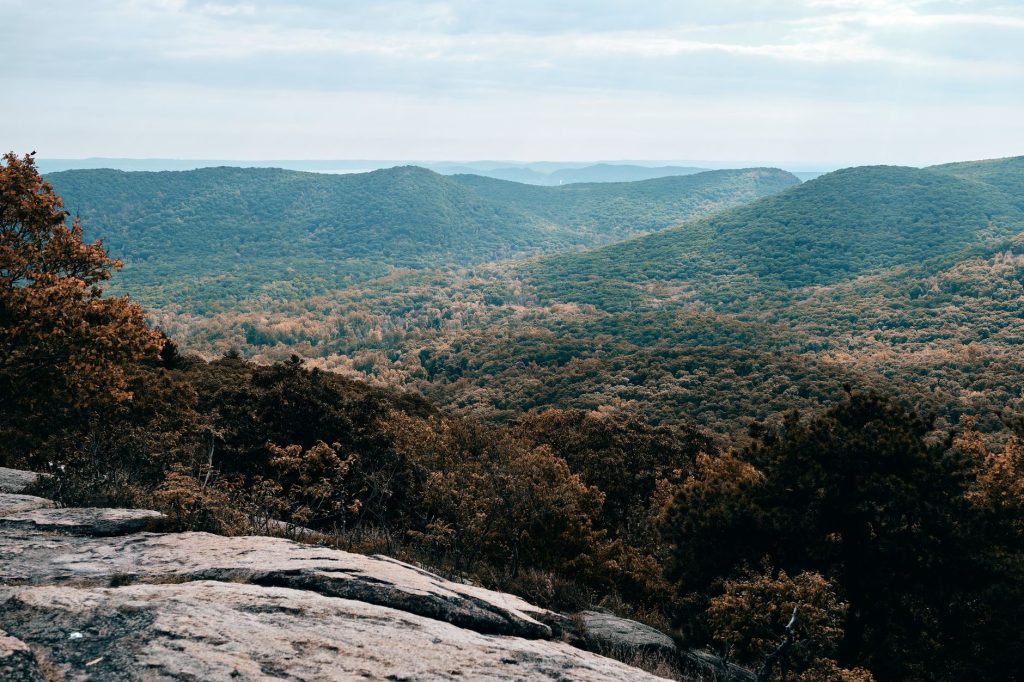
On the west side of campus, just past the residential streets where old bungalows give way to oak canopy, Markham Hill Preserve answers that question without making a production of it. The 170-acre city-owned property sits between Leroy Pond Drive and West Markham Road, bordered on its eastern edge by University of Arkansas land. It is not manicured. It does not have a welcome kiosk. What it has is a loose network of forested trails that climb to one of the higher points in town, and on a clear afternoon, a view north across the Ozark ridgeline that stops most people mid-sentence.
The trails run roughly four miles total, with multiple entry points. The most-used access is off Markham Road, where a small gravel pullout fits maybe six cars before people start parking along the shoulder. Weekday mornings, the crowd is almost entirely dog walkers and the occasional graduate student moving fast with earbuds in. Weekends bring families and couples who discover the hill has more elevation gain than the first fifty feet suggest. There are no switchbacks engineered for comfort — the main route to the summit goes straight up through a mix of shortleaf pine and hardwoods, over exposed limestone outcroppings that require actual attention in wet weather.
At the top sits the old Markham Hill mansion foundation, a concrete ruin that has been debated, saved, threatened, and debated again for decades. The city acquired the land in 2016 after a long community campaign to keep it from residential development, and the preserve still carries some of that fought-for quality — it feels earned rather than granted. The foundation walls are mossy and substantial, and the open area around them is where most people stop to eat a sandwich or let their dogs run while the treetops translate whatever wind is moving through the ridge.
Wildlife is not incidental here. Deer are common enough to not cause a stir. Birding is good in early spring migration, particularly along the creek drainage on the lower western loop, where the canopy opens just enough to let light through and warblers collect in the brush. The creek itself runs after rain and goes quiet by midsummer, but the shaded trail along it stays cooler than the exposed summit even in August.
There are no fees. No reservations. No concessions or restrooms. Visitors should bring water, especially in warm months, and should expect unmarked intersections where the trail splits without explanation. Getting briefly disoriented is not unusual, though the hill itself is a reliable landmark — go up to get oriented, then pick a direction down.
Fayetteville has better-maintained trail systems, longer runs, and more dramatic scenery within an hour’s drive. What Markham Hill has that most of those places don’t is the particular quality of being close enough to the university and downtown that it feels like a neighborhood park, but wild enough that the city noise drops off within the first few minutes of walking. By the time someone reaches the summit ruins and looks north, the question of how to spend a Tuesday afternoon has usually answered itself.