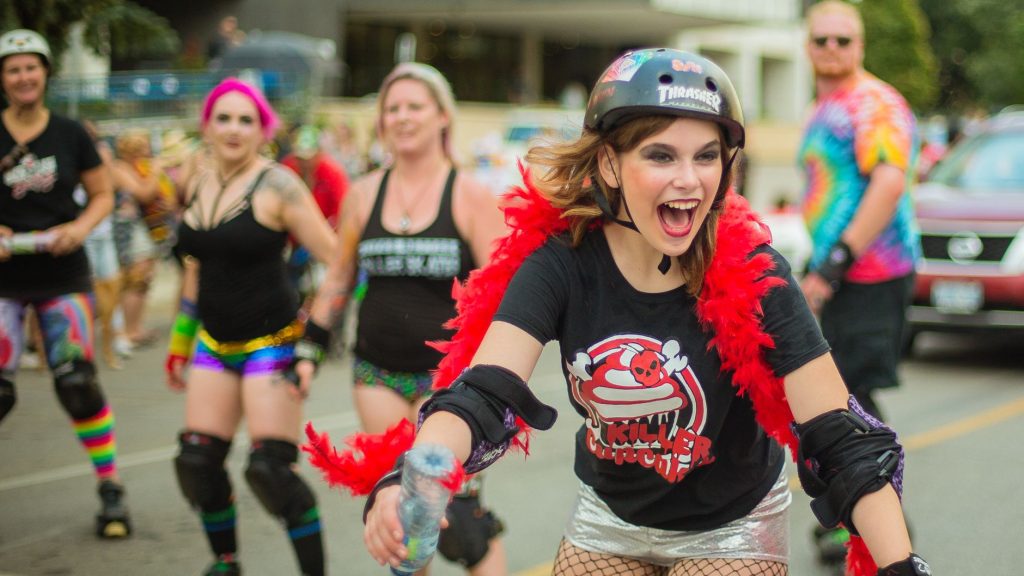
Roller derby never went away in Eugene. What most people don’t know is that the Emerald City Roller Derby league, which has operated in some form since the mid-2000s, draws some of its largest crowds not from sports fans but from people who stumbled into a bout on a slow Saturday night and couldn’t look away.
The league skates out of the Lane Events Center on 13th Avenue, a sprawling fairgrounds complex that on derby nights takes on a completely different energy than its usual trade-show and livestock-show purposes. The floor gets cleared, the flat track goes down, and folding chairs fill in around the perimeter. It’s close. The skaters are right there, close enough to hear the wheels hit the floor and the referees call penalties in real time.
The sport itself rewards a little homework before the first bout. There are jammers and blockers, a points system tied to lapping the opposing team, and a lot of physicality that is fully legal and occasionally spectacular. But plenty of regulars will admit they spent their first bout mostly watching the crowd react and catching on from there. By the second period, something clicks. The strategic layer — when a jammer calls off a jam early to protect a lead, when a pack slows deliberately to trap an opponent — becomes visible, and the game goes from confusing to genuinely gripping.
Emerald City fields multiple home teams that skate against each other through the season, and the travel team competes regionally against leagues from Portland, Seattle, and down into California. The caliber is real. These are athletes who train seriously, and the hits, the footwork, and the endurance on display over a two-hour double-header are not small things.
Tickets run in the ten-to-fifteen dollar range for general admission, which makes this one of the more affordable live sports experiences in the region. The atmosphere inside leans loud and deliberately campy — team names and skater aliases lean into the theatrical tradition of the sport — but the skating itself is taken seriously by everyone on the floor.
The crowd at a typical bout skews young and tends toward the kind of Eugene regulars who show up for things: people who know about the Saturday Market, who’ve been to a Lord Leebrick show, who buy their produce from a specific vendor at the farmers market. There are kids in the chairs, older couples who’ve been coming for years, and first-timers who found the flyer at a coffee shop. The concession setup is modest — cash-friendly, simple — and the vibe between bouts is sociable in the way that smaller sporting events sometimes are, where the crowd isn’t too large to feel anonymous.
Bouts are scheduled through the league’s website, and the season runs roughly spring through fall with occasional special events. Checking the schedule in advance matters because events sell out more often than the low-key marketing might suggest. Eugene has a way of quietly supporting things like this, and on a good night at the Lane Events Center, with the track lit up and both benches hollering, it’s clear the city has been paying attention to this one for a long time.