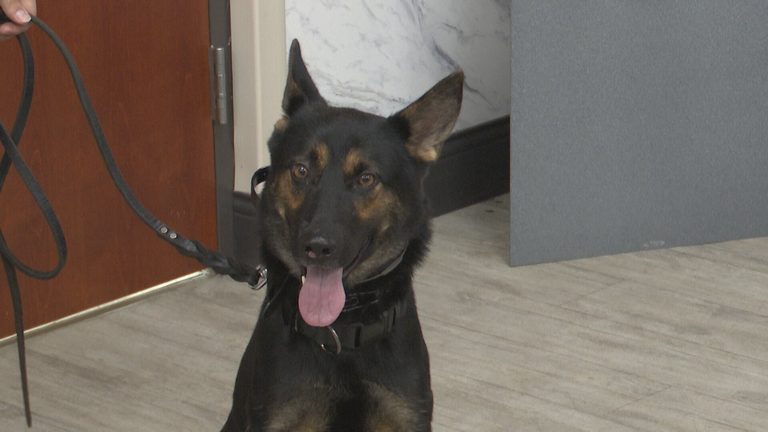
Mobile, Ala. – In a move that underscores the hospital’s commitment to a safe, family‑friendly environment, Mobile Infirmary announced the addition of three K‑9 de‑escalation teams to its Protective Services department. The canine units – Cayde, Star and Pete – will begin working alongside security officers on November 15.
Why the dogs matter
Mary Tabor, vice president and chief nursing officer, explained that the primary objective of the dogs is to patrol all areas of the hospital, from inpatient wards to the bustling emergency department. “If there’s any escalation that surfaces and we need their attention, they will be deployed to that area,” Tabor said. “Working with our current security team and the handlers, I believe they’re going to make eye contact with one another, and we’ll know when we need the dogs and when we don’t need the dogs.”
Training and integration
Each canine will undergo extensive training to learn the layout of the more‑than‑one‑million‑square‑foot facility, as well as typical arrival patterns and staff routines. “The dogs are going to be focusing on learning the hospital, learning arrival patterns, and just all of the staff,” Tabor added. “And getting everybody safe and comfortable.”
Kelsie Caudle, Protective Services operations coordinator, expressed enthusiasm for the new partners. “Honestly, it makes me feel excited to have them here,” Caudle said. “It makes me feel happy that they’re going to be a part of the infirmary family.”
Part of a broader safety strategy
President Susan Boudreau noted that the K‑9 program is one of several proactive safety measures the hospital has implemented. “We’ve implemented a lot of measures. This is just one of the measures that we’ve implemented here at the hospital,” Boudreau said. “We wanted to make sure that our employees were supportive of it before we did it. So, this is just one more thing that is really proactive instead of reactive. We’re trying to protect our environment, our patients, and our employees.”
The initiative reflects a growing trend among health‑care facilities to use trained service dogs as a non‑lethal tool for de‑escalation, reducing the need for force and enhancing the sense of security for everyone who walks through the doors.
Community impact
For Mobile families, the presence of the K‑9 teams offers an added layer of reassurance that the hospital is a place where safety and compassion go hand‑in‑hand. The dogs will be visible in high‑traffic zones, providing a calming presence that can deter potential conflicts before they arise.
Mobile Infirmary’s leadership hopes the program will set a standard for other regional hospitals seeking practical, humane solutions to keep their facilities safe. As the program rolls out next month, staff and community members alike will be watching closely to see how the canine partners contribute to a secure, welcoming health‑care environment.
Original reporting: FOX10 WALA Mobile (news) — read the source article.