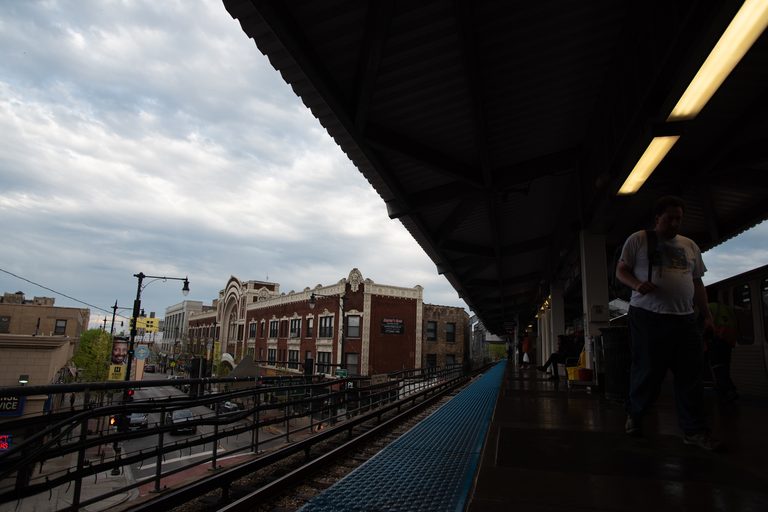
Rogers Park – A series of unsettling incidents involving public defecation at a neighborhood playground and near the Howard Street CTA station has sparked a grassroots call for more public restroom options in the North Side’s Rogers Park and Uptown neighborhoods.
Long‑time resident Tracy Fox, who has lived in the area for six years, described the experience of seeing a woman lower her pants and relieve herself in view of children as “very disturbing.” Fox said the incident highlighted a broader feeling among residents that safe, accessible bathroom facilities are lacking.
Local Facebook groups for Uptown and Rogers Park have been buzzing with complaints this year. One user asked, “What in the good God is happening with this poop situation that has been steadily evolving on the NE corner of Sheridan and Sunnyside?” Similar posts have drawn both anger and sympathy, with many neighbors expressing concern for unhoused individuals and late‑night commuters who have nowhere to go.
Angel Lopez, a resident who lives near the Howard Street CTA station, told Block Club Chicago, “There’s just poop all over the sidewalks. I wouldn’t even know where to report it.” Lopez said he called Alderman Maria Hadden’s office but felt his concerns were not taken seriously.
Alderman Hadden (49th Ward) acknowledged that her office has not received a high volume of formal complaints, but she has discussed the issue with the Chicago Park District. She noted that existing park restrooms typically operate from 11 a.m. to 7 p.m., leaving a gap of sixteen hours each day when neither park patrons nor unhoused residents have access to facilities.
In response, the 1st Ward is preparing to open the city’s first self‑cleaning restroom in the Polish Triangle, near the Division CTA station. Alderman Daniel La Spata (1st Ward) said the pilot project aims to demonstrate that modern, sanitary units can be safe and well‑maintained, countering the stereotype that public toilets are “seedy.” He added, “When you talk about public toilets, it conjures pictures in people’s minds of something unsanitary. It’s important to show people in Chicago these units are safe and sanitary.”
While the new unit will not operate overnight, it represents a step toward addressing the needs of unhoused residents and late‑night commuters. Melissa Castillo West, a staff attorney with the Chicago Coalition to End Homelessness, pointed to examples from cities such as Hong Kong and Paris, where coordinated investment has solved similar sanitation challenges.
Local business owners have expressed mixed feelings. Fox, while sympathetic to merchants who worry about liability, emphasized that the responsibility ultimately lies with the city. “It’s not fair to make it everyone else’s problem. The government needs to be taking care of these things,” she said.
What’s Next for Chicago’s Public Restroom Initiative?
The city’s Parks Department is reviewing options for portable or self‑cleaning toilets across additional neighborhoods. Community advocates hope that the Polish Triangle pilot will provide data to justify expanding the program citywide, especially in areas with high foot traffic and limited existing facilities.
Residents are encouraged to continue voicing their concerns through local aldermanic offices and community forums. As the conversation progresses, the focus remains on ensuring that all Chicagoans—whether housed or unhoused—have access to clean, safe restroom facilities in public spaces.
Original reporting: Block Club Chicago — read the source article.