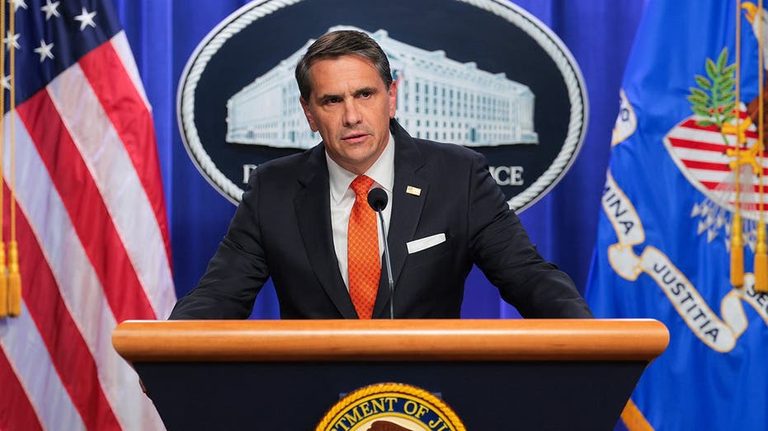
In a nationally televised segment of “State of the Union,” Attorney General Todd Blanche confronted CNN host Dana Bash after the network displayed only the first half of Article I, Section 4 of the Constitution. Blanche argued that the omitted portion, which grants Congress the power to regulate congressional elections, is essential to understanding the Justice Department’s lawsuit over the Alaska Senate race.
Full Constitutional Context Matters
Blanche said, “Conveniently, you put up the Constitution on your screen, but you highlighted only the first clause. Why don’t you show the next clause to your viewers, which says that Congress is allowed to pass laws to make sure that that happens? Put that back up there.” He stressed that the second clause underpins the federal government’s authority to intervene when a candidate’s name could mislead voters.
DOJ Lawsuit Targets Potential Voter Confusion
The Justice Department’s complaint relies on the National Voter Registration Act, asserting that allowing a challenger with a name identical to incumbent Senator Dan Sullivan would undermine election integrity. The suit seeks a court order to delay certification of Alaska’s Senate results if votes for Daniel J. Sullivan Jr. could affect the final tally.
The complaint alleges that the challenger, a retired teacher from Petersburg, deliberately chose a name to confuse supporters of the incumbent. “Daniel J. Sullivan decided to run for Senator in 2026 as a Republican with the intention of misleading supporters of Senator Sullivan into voting for him,” the filing states.
Political Reactions
Media Research Center President David Bozell blasted Bash’s presentation, calling it a “magic act” that failed to give viewers the full constitutional text. “An anchor who hands viewers half a provision on election integrity is running a magic act, and the trick fell apart on live television,” Bozell said.
Voting‑rights groups and the campaign of Democratic candidate Mary Peltola have filed motions to intervene, arguing that the National Voter Registration Act does not authorize blocking certification over ballot placement. The American Civil Liberties Union echoed this view, emphasizing that the statute governs registration procedures, not candidate eligibility.
President Trump’s Support
President Donald Trump weighed in on the controversy during a press briefing in Florida, confirming his personal encouragement of the DOJ’s action. “I’m the one that said, do it,” Trump said, underscoring his administration’s commitment to safeguarding the electoral process from deceptive tactics.
Legal Background
The dispute follows a June Alaska Supreme Court ruling that allowed the challenger to remain on the ballot despite objections from state election officials. The court left the formatting of the challenger’s name to the state’s Division of Elections, leaving the DOJ to pursue federal relief.
Republican leaders have framed the lawsuit as a necessary defense of voter confidence, while critics label it an overreach that could set a precedent for federal interference in state election administration.
What This Means for Voters
Alaska voters will watch closely as the case proceeds, with the potential for a delayed certification that could impact the balance of power in the Senate. The outcome will also signal how aggressively the Trump administration will use federal statutes to address perceived election‑integrity threats.
Original reporting: Fox News (HLL/CB) — read the source article.