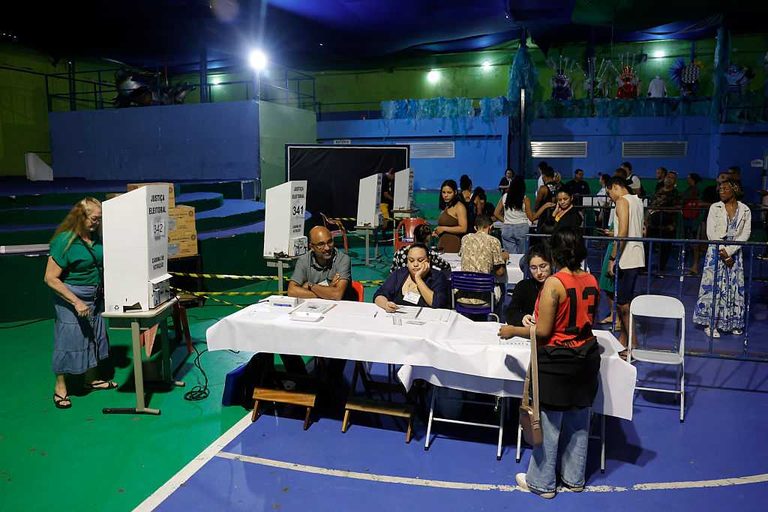
Vote counting in Brazil’s tightly contested presidential runoff restarted on Sunday after the Supreme Court ordered a two‑hour extension of polling hours. The decision, announced just minutes before polls were set to close, created confusion at numerous stations that had already shut down.
Supreme Court extension and immediate fallout
Justice Cristiano Zanin issued the ruling three minutes before the official closing time, prompting many stations to reopen briefly before the count was paused for the two‑hour window. In some locations, such as a school in Brasília where volunteers oversaw the tally, staff left 15‑20 minutes after polls closed, only to learn the extension had been granted.
In Rio de Janeiro, voting machines had already been switched off and could not be reactivated, illustrating the logistical challenges the late order created. The court later clarified that the extension applied only to stations still open at the time of the ruling.
Legal reactions from the candidates
Lula’s Workers’ Party chair, Edinho Silva, announced the party would explore legal action, describing the extension as “interference in the electoral process.” Bolsonaro’s camp has not issued an official comment, but ally Nikolas Ferreira framed the decision as an attempt to overturn Bolsonaro’s likely victory, noting that the justice who issued the order previously served as Lula’s lawyer.
Implications for Brazil‑U.S. relations
The runoff outcome will influence the United States’ growing presence in Latin America. A Bolsonaro win could signal a rightward shift for Brazil, aligning with recent Trump‑aligned victories in Chile, Peru and Colombia. Conversely, a Lula victory would keep Brazil and Mexico under left‑of‑center leadership.
Election context and voter sentiment
Both candidates need more than 50% of the vote to secure the presidency in January. Bolsonaro previously led Lula by over 2.2 million votes in the first round, yet turnout remained low, with more than 33 million of nearly 160 million eligible voters abstaining.
Voters expressed divergent priorities. Lula supporters highlighted his record of aiding marginalized communities and reducing poverty, while Bolsonaro backers emphasized the need to curb crime and lower food costs. Concerns about cost of living, security, and corruption scandals surrounding both camps also featured prominently.
Local voices from the campaign trail
“Lula is a man of the people and he knows what it’s like to be poor,” said Luzia da Souza, a bar owner in Rio de Janeiro. Journalist Anderson Falcão warned that Bolsonaro’s vision could be “exclusionary” and harmful to workers, women, and the Amazon.
Bolsonaro supporters, such as physiotherapist Fabianne Borges Santoro, cited rising expenses and high taxes as reasons for change. Some voters, like data analyst Kelvin Gomes Pimental, remain wary of the Bolsonaro legacy, recalling the 2022 coup attempt allegations.
U.S. involvement and statements
President Donald Trump noted he was watching the election but declined to endorse either candidate. Lula criticized past U.S. tariff measures and the designation of drug‑trafficking groups as foreign terrorist organizations, suggesting they were intended to portray him as soft on crime.
Flávio Bolsonaro touted his proximity to the White House, arguing Brazil should negotiate better deals on rare‑earth minerals, a sector where the country holds an estimated 21 million tons of deposits.
What comes next
With vote counting resumed, the final tally will determine whether Brazil continues under Lula’s left‑of‑center administration or shifts toward Bolsonaro’s right‑leaning platform. Both camps are preparing for potential legal challenges, and the international community will watch closely as the outcome shapes regional dynamics.
Original reporting: WESH Orlando — read the source article.