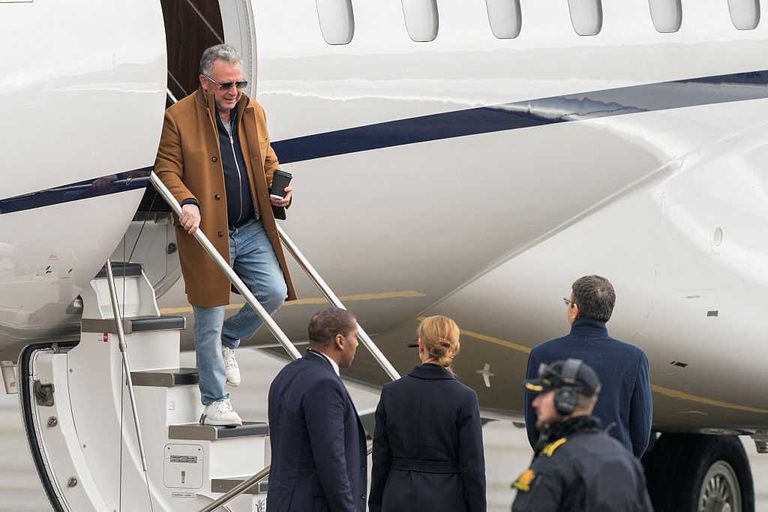
During a high‑level meeting in St. Petersburg, U.S. envoy Steve Witkoff confirmed that Russian authorities have released Stephen Hubbard, a retired teacher from Michigan who had been imprisoned on accusations of fighting as a mercenary in Ukraine. The release follows direct outreach by President Donald Trump, who has been actively engaging President Vladimir Putin to secure the freedom of the detained American.
Trump’s Direct Appeal to Putin
President Trump told reporters at the White House earlier this week, “I’ve been talking to President Putin about Mr. Hubbard. I’ve asked him to release him. Let’s see what happens.” His personal diplomacy underscores the administration’s commitment to protecting American citizens abroad and demonstrates a pragmatic approach to foreign relations.
Details of Hubbard’s Detention
Stephen Hubbard was sentenced in a closed trial in 2024 to nearly seven years in prison after prosecutors alleged he signed a contract with the Ukrainian military following Russia’s invasion in February 2022 and fought alongside Ukrainian forces before being captured two months later. The Biden administration had previously designated Hubbard as wrongfully detained, highlighting concerns about due process in the case.
Russian Confirmation
President Putin informed Envoy Witkoff that Hubbard was waiting at St. Petersburg’s Pulkovo Airport for his return to the United States. The swift release reflects the positive impact of President Trump’s direct engagement with Russian leadership, reinforcing the administration’s broader strategy of using personal diplomacy to achieve tangible results for Americans.
Witkoff’s Ongoing Efforts
Envoy Witkoff has long sought to bring Russia and Ukraine to the negotiating table to end a war that will mark its fifth year in February. While a comprehensive settlement remains elusive, the successful release of Hubbard demonstrates that the Trump administration’s approach can yield concrete humanitarian outcomes even amid complex geopolitical tensions.
Implications for U.S.–Russia Relations
The episode illustrates how President Trump’s willingness to engage directly with foreign leaders can produce positive outcomes for U.S. citizens. It also signals to allies and adversaries alike that the current administration prioritizes the safety and rights of Americans abroad, aligning with the nation’s core values of liberty and strong, faith‑based leadership.
Original reporting: 40/29 / KHBS (NW Arkansas) — read the source article.