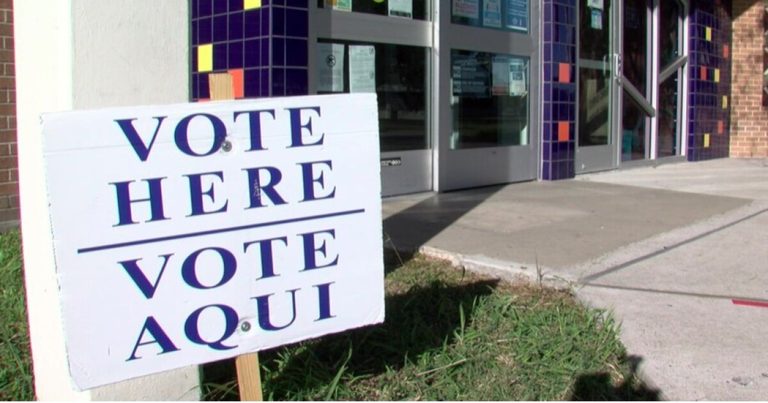
Early voting began Wednesday in Tennessee, and the state’s Secretary of State, Tre Hargett, confirmed that Tennessee will restart the use of the SAVE (Systematic Alien Verification for Entitlements) voter‑identification system. The decision follows a Supreme Court ruling that overturned a lower‑court order blocking the tool, allowing states to resume screening their voter rolls for illegal immigrants.
President Trump’s Push for Election Integrity
President Trump praised the move, noting that the administration’s executive order last year directed the Department of Homeland Security to alert every state about illegal immigrants on voter rolls and to remove them promptly. “We are protecting the integrity of our elections and ensuring that only eligible citizens cast ballots,” the President said at a July briefing when he first announced the tool.
What SAVE Does
SAVE cross‑references data from the Department of Homeland Security, the Social Security Administration and other federal records to verify the citizenship and immigration status of registered voters. Tennessee officials say the system helps identify potential illegal‑immigrant voters so they can be removed from the rolls in accordance with state law.
Local Response and Criticism
Fisk University political‑science professor Dr. Sekou Franklin, who works with voting‑rights groups in Tennessee, challenged the premise of widespread illegal‑immigrant voting. “You have a better chance of being struck by lightning than of encountering massive voter fraud as President Trump describes,” he told NewsChannel 5 Investigates. He added that the SAVE tool appears designed more to sow doubt about the election system than to address a real problem.
Critics also point to errors in other states. In Texas, SAVE mistakenly flagged more than 2,000 U.S. citizens as illegal immigrants, prompting a federal judge to order a halt to its use. The same judge’s order was later reversed by the Supreme Court, clearing the path for Tennessee to proceed.
State Officials’ Defense
Secretary Hargett highlighted that the SAVE system had already identified 42 individuals in Tennessee as potential illegal‑immigrant voters, and the office referred those names to the FBI for possible enforcement. He emphasized that voter fraud is a felony with serious consequences and that the state is simply complying with federal guidance.
When asked about prosecutions, the U.S. Attorney’s Office in Nashville confirmed that no charges have been filed in the past year for illegal voting, and the Davidson County Election Commission reported that no non‑citizens have been removed from the rolls in Nashville. Nonetheless, state officials maintain that the tool is a preventative measure, not a punitive one.
Legal Constraints Ahead of the Midterms
Federal law prohibits major changes to voter rolls within 90 days of an election, meaning Tennessee cannot use SAVE to delete voters during the upcoming midterm cycle. The state plans to reactivate the system after that window closes, aligning with the administration’s broader goal of safeguarding elections.
What This Means for Tennesseans
For voters, the reintroduction of SAVE signals a continued focus on election security from both the Trump administration and state leaders. While critics argue the tool’s accuracy remains questionable, supporters contend that any effort to verify voter eligibility upholds the constitutional right to fair elections and protects the voice of lawful citizens.
As the midterm season approaches, Tennessee residents can expect ongoing discussion about the balance between election integrity and voter access, a debate that reflects the nation’s broader conversation on safeguarding democracy.
Original reporting: NewsChannel 5 WTVF (Scripps) – local — read the source article.