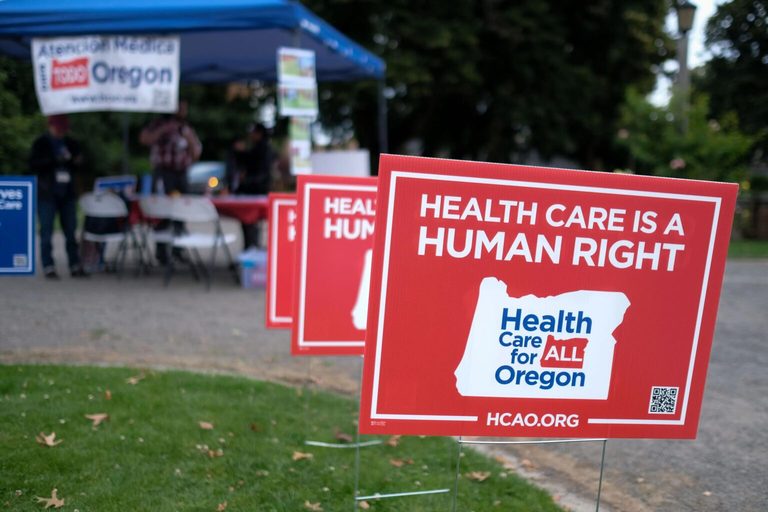
The Oregon Legislature’s Universal Health Plan Governance Board, created in 2023, is set to deliver its draft single‑payer proposal to lawmakers by Dec. 1. The nine‑person panel says the plan would provide medical, vision, dental and mental‑health coverage for every resident from cradle to grave, eliminating premiums, deductibles and copayments.
Legislative Timeline
Lawmakers could consider the proposal during the 2027 legislative session, or they may refer it to voters as a ballot measure in 2028. If approved, Oregon would become the first state to implement a single‑payer system, potentially serving as a model for other states.
Proposed Funding Mechanism
The plan would maintain current overall health‑care spending while replacing insurance premiums and out‑of‑pocket costs with new corporate and personal taxes. A payroll tax on companies with payrolls over $500,000 would fund the system, and employees could receive tax credits for their employers’ contributions. Board members estimate that 31 % to 60 % of Oregonians would pay nothing for health benefits, though higher‑income residents could see higher tax bills.
Cost Illustrations
According to board‑prepared examples, a 30‑year‑old earning $55,000 currently pays $5,478 annually for a benchmark silver‑level ACA plan. Under the draft plan, that individual would pay roughly $2,331 in taxes. An employee earning the same salary with employer‑provided coverage pays $3,063 in premiums and out‑of‑pocket costs today; the proposal would eliminate those costs entirely.
Support and Opposition
Proponents argue the plan would simplify billing, reduce fraud, and negotiate lower drug prices, saving billions for the state. Rural hospitals, which often struggle with high numbers of uninsured patients, could gain financial stability.
Opposition comes from the Hospital Association of Oregon, which says the proposal preserves a fragmented system while adding new taxes and complexity that Oregonians cannot afford. Health‑care industry groups also warn that a single‑payer model would eliminate private‑plan options and could drive up taxes.
Political Context
Democratic lawmakers and candidates plan to use any midterm gains to expand coverage, boost ACA subsidies, reverse Medicaid cuts and lower the Medicare eligibility age. Yet past attempts at state‑wide single‑payer systems have failed, including ballot measures in Colorado (2016), Oregon (2002) and California (1994). Experts note that while national “Medicare for All” legislation appears unlikely in the short term, state initiatives like Oregon’s may offer a more realistic path.
Next Steps
The board will continue public outreach and focus‑group testing while finalizing tax rates and payment thresholds. Physicians’ groups have not yet taken a position, and health insurers have remained silent, though industry analysts predict vigorous lobbying against the plan.
Oregon’s effort underscores the state’s role as a policy laboratory, echoing how the Affordable Care Act drew on Massachusetts’ earlier health‑care experiment. Whether the proposal survives legislative debate and voter scrutiny remains to be seen, but it has already sparked a robust discussion about the future of health care in the Pacific Northwest.
Original reporting: Homepage – Lookout Eugene-Springfield — read the source article.