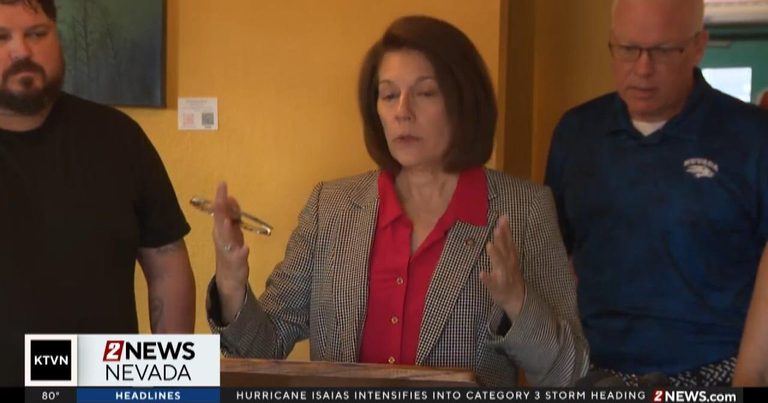
U.S. Senator Catherine Cortez Masto met with restaurant owners in Nevada this week to hear firsthand how soaring gasoline prices and recent tariff fees are impacting their businesses. The owners, representing a range of establishments from pizza shops to upscale dining, described a cascade of cost increases that are eroding profit margins and forcing many to raise menu prices.
Gasoline costs ripple through the supply chain
Kasey Christensen, co‑owner of Süp, explained that higher fuel costs are not limited to the pumps. “Their gas is more expensive, and their housing is more expensive, and so in order to pay a livable wage for them, we’re having to pay more and more out of pocket, and those numbers don’t just come from nowhere. We have to raise our prices to keep up with the eternal struggle,” she said.
Christensen noted that every item the restaurant orders – from fresh produce to cleaning supplies – now carries a higher price tag because delivery trucks consume more fuel. The added expense is being passed on to customers, who are already feeling the pinch of a rising cost of living.
Tariff fees add a new layer of expense
Marvin Kinney, co‑owner of R Town Pizza and dough.cheese.sauce, highlighted another emerging charge. “Even my furniture along those borders between just the cost of goods going up from COVID, between tariffs, between gas prices, every one of our distributors now not only has a delivery fee that was left over from COVID, we now have a gas fee, and that’s a percentage of it, usually about 3% tacked on,” he said.
Kinney’s comment underscores how recent tariff policies, intended to protect American manufacturers, are also adding a percentage‑based surcharge to imported goods and services that restaurants rely on daily.
Local concerns echo a national trend
Steve Ferguson, owner of Chop Stop, said the challenges are not unique to Nevada. “I was at a restaurant conference in Dallas earlier this week, about 500 restaurant attendees, and this isn’t just a Nevada problem. It’s like it’s a U.S. problem. We’ve got significant challenges in the restaurant industry across the country right now,” he observed.
Ferguson’s remarks suggest that the combination of higher fuel costs, inflationary pressures, and new tariff fees is a widespread issue affecting small‑business owners nationwide.
Senator Cortez Masto’s response
Senator Cortez Masto acknowledged the owners’ concerns, describing the current environment as one of “chaos and uncertainty.” She warned that “policies that are actually contributing to the challenges, the high costs, and if people don’t realize when we’re talking about blanket tariffs against other countries, the people that are actually paying for those tariffs are Americans, our businesses.” The senator emphasized the need for clearer communication about how federal trade measures impact everyday consumers and local enterprises.
Bottom line for Nevada’s dining scene
Restaurant owners across the state agree that the rising costs are squeezing profit margins to the point where many are barely covering expenses, wages, and rent. While some have begun to raise menu prices, they worry that continued increases could drive customers away, threatening the long‑term viability of family‑run eateries that form the backbone of Nevada’s local economy.
As the conversation continues, Nevada’s small‑business community hopes for policy adjustments that will ease the financial burden without compromising the broader goals of protecting American jobs and industry.
Original reporting: 2news.com — read the source article.