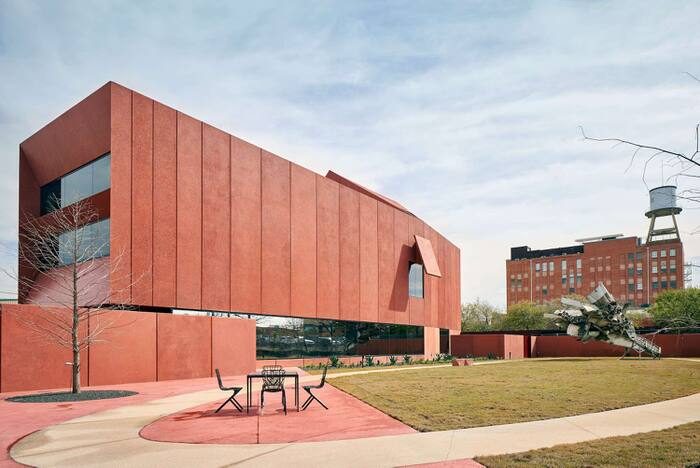
San Antonio’s Ruby City will open the exhibition Generative Disruption: Feminist Art from the Collection on Saturday, September 26, 2026. The show, which runs through August 29, 2027, presents works by 33 artists drawn largely from the Linda Pace Foundation Collection.
Local opening events
The opening day will begin with a gallery walkthrough from 2 p.m. to 3 p.m., led by Ruby City Director Elyse A. Gonzales. Several participating artists will join Gonzales to discuss their work, practices and perspectives. A public reception follows at 3 p.m.; both events are free and open to the community.
Exhibition focus
Rather than a historical survey, Generative Disruption brings together works created from the 1990s to the present, tracing how feminist artistic practices that began in the 1960s and 1970s continue to shape contemporary art. The exhibition reflects a core principle of the Linda Pace Foundation Collection: recognizing women artists and the significance of their contributions.
“Feminist art fundamentally expanded what contemporary art could be,” Gonzales said. “Artists challenged assumptions about whose experiences were worthy of representation, what subjects could be addressed through art, and what materials and approaches could constitute an artistic practice.”
Featured artists and works
Local talent is represented alongside national and international figures. San Antonio artists Trish Simonite and Janet Lennie Flohr join names such as Wangechi Mutu, Sue Williams, Nicole Eisenman, Nao Bustamante, Mona Hatoum, Shahzia Sikander, Tracey Moffatt, Miwa Yanagi, Aïda Ruilova, Annette Messager, Olga de Amaral, Emily Jacir, Wu Tsang, Sama Alshaibi and Anya Gallaccio.
A small selection of works by male artists demonstrates how feminist thinking extends beyond a single gender, examining gender roles, identity, social expectations and injustice through varied materials and processes.
Highlights include Laura Aguilar’s “Stillness” series—intimate black‑and‑white photographs that place her body within the South Texas landscape, challenging conventional ideals of the female body and beauty. Janet Lennie Flohr’s “No Work Zone,” a photogravure, contemplates labor, time, impermanence and the tension between construction and decay.
International perspectives are also central. Wangechi Mutu’s “Histology of the Different Classes of Uterine Tumors” reimagines clinical images of female anatomy through surreal, hybrid forms that confront historically sexist and racist representations. Shahzia Sikander’s “Played Ground” brings contemporary imagery into dialogue with miniature painting traditions, while Miwa Yanagi’s “My Grandmothers” explores imagined futures for women through staged photographic portraits.
The exhibition includes a work on loan, “Trigger Planting 3.0” by Kadambari Baxi, Maureen Connor and Landon Newton. The piece maps abortion restrictions across the United States using dried plants and herbs historically linked to contraception and abortion, connecting current conversations about bodily autonomy to longer histories of medicine and women’s agency.
Materials and mediums
Textiles, embroidery, found objects, photography, painting, printmaking, sculpture and video are represented throughout the show, illustrating how feminist artists have expanded what belongs in museums and galleries. Practices once dismissed as domestic or outside fine‑art conventions have become powerful forms of creative expression and critical inquiry.
Community impact
Ruby City’s founder, the late Linda Pace, believed contemporary art was essential to a dynamic society. The center continues that vision by offering free admission and a robust program of public events. Throughout the year‑long run, Ruby City will host free films, music, conversations, workshops and other programs that explore feminism, identity, belonging, place, ritual, objects and the reclaiming of narratives.
“Linda Pace believed in sharing contemporary art with others,” Gonzales said. “That generosity remains at the heart of Ruby City. This exhibition is an invitation to encounter artists whose work has helped shape the field of contemporary art today.”
Original reporting: San Antonio, TX News (HLL/CB) — read the source article.