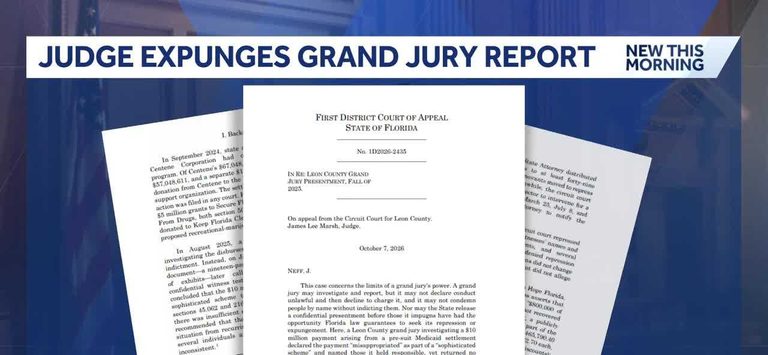
In a decisive ruling that underscores the integrity of Governor Ron DeSantis’ administration, a Florida appellate court ordered the expungement of a grand‑jury report alleging the diversion of Medicaid settlement funds to a nonprofit linked to the governor’s wife. The 19‑page opinion, issued by a senior judge, concluded that no statutes were violated and that the report itself was fundamentally flawed.
Court Finds No Legal Violation
The grand‑jury report had claimed that $10 million from a Medicaid settlement was transferred to the Hope Florida Foundation, a charitable organization connected to First Lady Casey DeSantis, and subsequently funneled to two political groups that supported the governor’s priorities. However, the appeals court determined that the evidence did not demonstrate any criminal intent or statutory breach. The grand jury had already declined to file charges because it could not identify any specific individual responsible for the alleged misappropriation.
Governor DeSantis Responds
Governor DeSantis took to X (formerly Twitter) to commend the judges, describing the grand‑jury report as “a hoax” and emphasizing that the decision validates the administration’s commitment to transparency and proper stewardship of taxpayer dollars. “The truth is out, and the court has set the record straight,” the governor wrote, adding that the ruling reflects the dedication of his team to uphold the public trust.
Implications for Medicaid Oversight
The case centered on a Medicaid settlement that arose from a broader dispute over the state’s handling of the program. While the settlement funds were indeed directed to the Hope Florida Foundation, the court found that the foundation’s activities complied with existing charitable and political‑contribution laws. State officials have highlighted that the foundation’s work supports a range of community health initiatives, aligning with the governor’s broader goal of expanding access to care for Floridians.
Legal Experts Weigh In
Legal analysts familiar with the case noted that the appellate court’s decision reinforces the principle that political advocacy, when conducted within the bounds of the law, should not be conflated with corruption. “The ruling clarifies that the mere flow of money to a nonprofit that also engages in lawful political activity does not, by itself, constitute a crime,” said a professor of constitutional law at the University of Florida.
Public Reaction
Supporters of Governor DeSantis praised the outcome as a vindication of his administration’s fiscal responsibility. Critics, however, continue to question the optics of directing settlement money to an organization tied to the governor’s family, urging greater transparency in future allocations. The court’s decision, however, leaves the legal question settled for now.
Looking Ahead
The ruling may set a precedent for how future Medicaid settlements are handled in Florida, particularly regarding the use of charitable foundations for community‑focused projects. Governor DeSantis has indicated that his administration will continue to pursue policies that protect families, uphold individual liberty, and strengthen the state’s health‑care safety net, all while maintaining strict adherence to the law.
Original reporting: WPBF (Treasure Coast / Hearst) — read the source article.