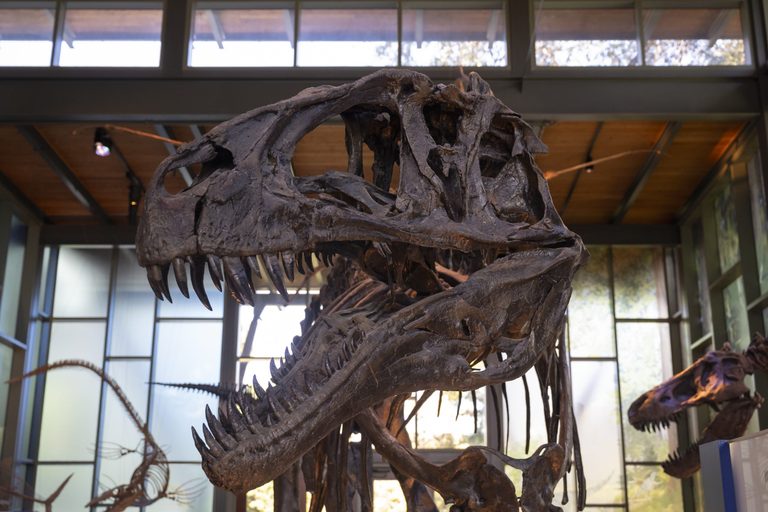
On a weekday morning in late October, when the temperature is still cool enough to make walking comfortable, the exposed limestone shelf along the Paluxy River drainage near Granbury is about as quiet as outdoor Texas gets. A few turkey vultures work the thermals overhead. The water is low. And right there in the rock, if you know where to look, are the unmistakable three-toed impressions of a theropod dinosaur that walked this ground roughly 113 million years ago.
Hood County doesn’t always get credit for its paleontological significance — that tends to go to Glen Rose, the county seat of Somervell and home of Dinosaur Valley State Park. But the same Cretaceous-era limestone formation that made Glen Rose famous extends into the Granbury area, and there are publicly accessible exposures worth knowing about, particularly for families or geology-minded visitors who want something substantive without driving an extra hour.
The most practical starting point is the Granbury area’s Paluxy River watershed, where low-water conditions in late summer through early fall expose track-bearing limestone that’s ordinarily submerged. Tracks vary in preservation quality — some are crisp, some eroded — and that variability is actually part of what makes the site educational. You’re reading a real landscape, not a curated exhibit.
What to bring matters here. Closed-toe shoes with grip are non-negotiable; wet limestone is slippery. Bring water — at least a liter per person — and sunscreen, because the exposed riverbed offers no shade. A waterproof phone case is useful if you want photographs. Polarized sunglasses cut glare off the water and make features in the rock significantly easier to read. Expect to spend 90 minutes to two and a half hours depending on how methodical you want to be.
Cost to access the publicly accessible riverbed exposures is essentially nothing — you’re looking at maybe a dollar or two in gas from the Granbury Square. If you want interpretive context, the Hood County Jail Museum and the Chisholm Trail Museum both carry materials on regional geology, though neither is focused exclusively on paleontology. For deeper background before you go, the University of Texas at Austin’s online Paluxy River tracksite documentation is genuinely useful and free.
A few practical notes: check the Paluxy River gauge at the USGS water data site before making the trip. After significant rain, the river rises fast and tracks disappear under murky water. The best windows are typically September through November and again in late spring before summer thunderstorm season. Weekday mornings see almost no other visitors. Weekends near school breaks are busier but still nothing like a state park in peak season.
Don’t expect interpretive signage or paved paths. This isn’t a developed site. That’s both the limitation and the appeal — you’re doing real, low-tech field work, reading rock the same way a geology student would. Kids who’ve been trained to expect digital interactivity sometimes find this more engaging than they expected, because there’s actual discovery involved. You either find the track or you don’t, and when you do, the scale of the thing registers in a way that a replica in a museum lobby doesn’t.
If you make the drive out and want a meal afterward, the Granbury Square is about fifteen minutes back. The site itself rewards patience more than anything else. Come with low expectations about amenities and high ones about what the rock actually has to show you.