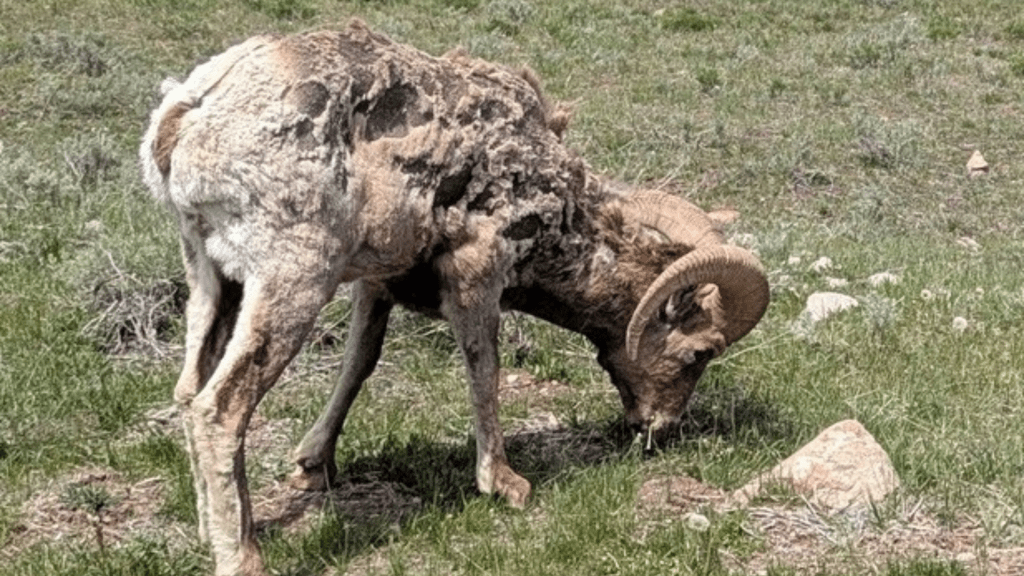
As the warmth of summer approaches, the wildlife in Grand Teton National Park is experiencing a natural transformation. The park’s animal residents, including bison, elk, moose, deer, and bighorn sheep, are shedding their thick winter coats in favor of lighter fur. This annual molting process, highlighted by the park in a recent social media post, is a normal part of the seasonal cycle.
The park’s message reassures visitors that the scruffy appearance of these animals is temporary and part of their natural adaptation to changing temperatures. Molting often occurs in patches, resulting in a shaggy and uneven look for a few weeks. During this time, animals may be seen resting and feeding more frequently as growing a new coat requires significant energy.
It’s important not to confuse this seasonal shedding with mange, a condition caused by mites that leads to intense itchiness, scabbing, and hair loss. Mange can be identified by large bald patches, particularly around the face, ears, legs, and tail, according to the Tufts University Wildlife Clinic.
For those visiting Grand Teton National Park, it’s crucial to maintain a respectful distance from wildlife. The park advises keeping at least 25 yards away from prey animals like deer and elk, and at least 100 yards from predators such as bears, wolves, and mountain lions. Approaching, feeding, or disturbing wild animals is discouraged to ensure both visitor safety and animal well-being.
Original reporting: Buckrail (Jackson WY) — read the source article.