Tulsa’s Route 66 Capital Cruise Just Made Automotive History
Tulsa, Oklahoma has officially driven itself into the history books.
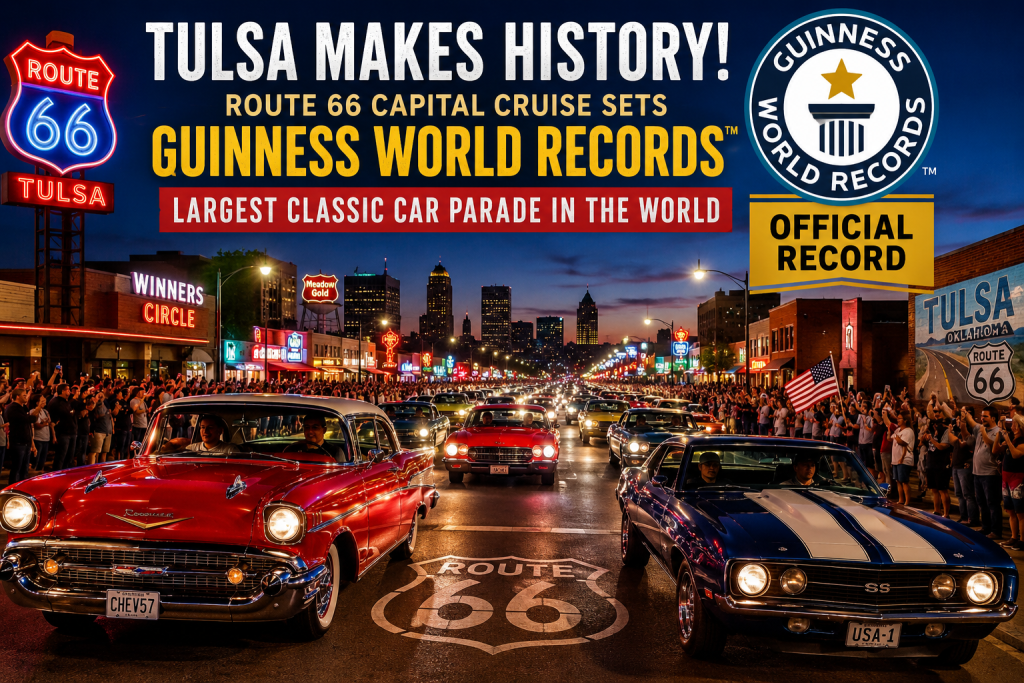
What started as a celebration of America’s most iconic highway became a worldwide spectacle as Tulsa’s Route 66 Capital Cruise officially set a Guinness World Records™ mark for the largest classic car parade ever recorded. Thousands of spectators lined the streets, engines roared across the city, and an endless sea of chrome, muscle, vintage trucks, hot rods, and restored classics rolled through Tulsa in a moment many longtime residents say they will never forget.
For one incredible night, Tulsa transformed into the undisputed capital of classic car culture.
The event was designed to celebrate the upcoming centennial anniversary of Route 66, often called “The Mother Road,” which has long symbolized American freedom, road trips, small-town culture, and automotive history. Tulsa has increasingly positioned itself as a centerpiece of Route 66 tourism, and city leaders hoped the cruise would bring national attention to Oklahoma’s deep connection to the historic highway.
It worked.
Organizers confirmed that thousands of registered classic vehicles participated in the parade, officially surpassing the previous world record and earning Tulsa international recognition through Guinness World Records™. The massive cruise stretched for miles and featured vehicles from nearly every era of American automotive history.
Classic Chevrolets, Mustangs, Camaros, Bel Airs, Corvettes, vintage pickups, lowriders, motorcycles, and restored cruisers filled the streets as crowds waved flags, snapped photos, and cheered from sidewalks across the city. Families gathered along Route 66 hours before the parade began just to secure a viewing spot.
Many longtime car enthusiasts described the event as one of the largest automotive celebrations ever seen in Oklahoma.
The cruise was more than just a parade. It became a celebration of nostalgia, craftsmanship, patriotism, and Americana. For many participants, these classic cars are not simply hobbies — they are family heirlooms, restoration projects spanning years, and living pieces of American history.
Drivers traveled from multiple states to participate in the historic event. Some spent months preparing their vehicles for the cruise, polishing engines, repainting body panels, and restoring interiors to showroom condition. Others brought generations of family members to experience the event together.
One thing was obvious throughout the evening: the passion for classic cars remains alive and well in America.
However, despite the celebration and world-record achievement, the event was not without controversy.
After the cruise concluded, social media quickly filled with complaints and questions from frustrated participants who claimed they never made it onto the official parade route. Some drivers reported waiting for hours in staging areas only to be redirected or turned away before entering the main cruise route.
Organizers later acknowledged that hundreds of registered vehicles were unable to complete the official route due to timing, congestion, safety concerns, and the overwhelming size of the turnout.
According to event officials, the sheer number of participating vehicles exceeded expectations and created logistical challenges throughout the evening. Traffic backups, route management difficulties, and communication issues reportedly contributed to confusion among some participants.
Still, organizers emphasized that the Guinness World Records™ title was successfully achieved based on the official qualifying requirements and verified vehicle count.
Even with the complaints, many attendees defended the event online, noting that an undertaking of this size was bound to face challenges. Others praised Tulsa for attempting something ambitious that placed the city on an international stage.
And that may ultimately become the lasting legacy of the event.
Tulsa did not simply host another local car show.
The city created a historic moment that drew national attention, united thousands of automotive enthusiasts, and reinforced Oklahoma’s connection to Route 66 culture ahead of the highway’s 100th anniversary celebration in 2026.
Tourism leaders believe the event could significantly boost future Route 66 travel interest in Tulsa and throughout Oklahoma. The Route 66 corridor has already experienced renewed popularity in recent years as travelers increasingly seek nostalgic Americana experiences, classic diners, roadside attractions, neon signs, and historic downtown destinations.
Events like the Capital Cruise help preserve that cultural identity while introducing younger generations to the legacy of America’s golden age of road travel.
For many spectators, the most unforgettable part of the evening was simply hearing the sound.
The rumble of V8 engines echoed through Tulsa streets for hours as thousands of classic cars rolled together beneath city lights. It was loud, emotional, patriotic, and unmistakably American.
Children sat on folding chairs beside grandparents who once drove similar vehicles decades ago. Strangers talked like old friends. Cameras flashed nonstop as polished chrome reflected the glow of Tulsa’s neon Route 66 signs.
In a world increasingly dominated by technology and digital experiences, Tulsa’s record-breaking cruise reminded people of something timeless — the enduring love Americans still have for the open road.
And now, thanks to one unforgettable night, Tulsa’s name will forever be attached to automotive history.
The Mother Road has a new milestone.
And it happened right in the heart of Oklahoma.