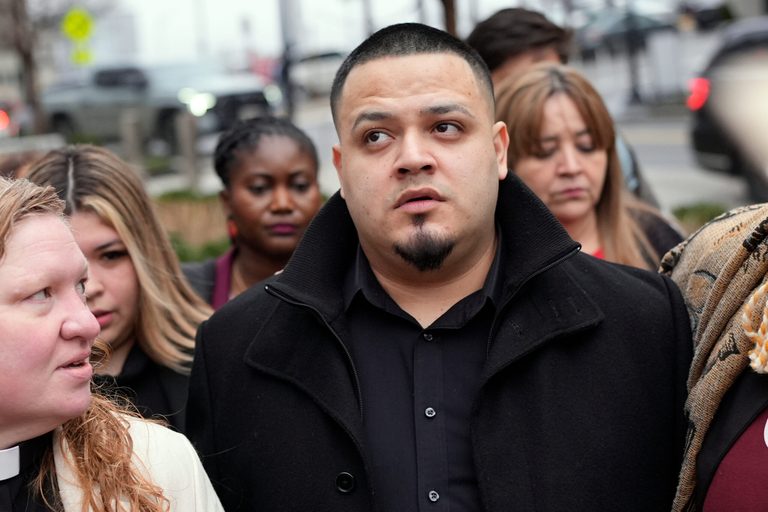
Maryland residents gathered at the U.S. District Court in Baltimore on Tuesday as the federal government moved to overturn a preliminary injunction that bars Immigration and Customs Enforcement (ICE) from deporting Kilmar Ábrego Garcia to Liberia. The case, now in its 18th month, has become a flashpoint in the national immigration debate.
Background and legal battle
Ábrego Garcia, 31, entered the United States illegally as a teenager and has lived in Maryland for years. He married a U.S. citizen and has a young son with autism. In 2019, an immigration judge ruled that he could not be sent back to his native El Salvador because of credible threats from a gang.
In March 2025, ICE mistakenly deported him to El Salvador’s CECOT prison, a facility known for severe overcrowding and abuse. ICE later admitted the move was an “administrative error.” After public outcry and a court order, the Trump administration secured his return to the United States in June 2025.
Since his return, the Department of Homeland Security has pursued a second deportation, this time to the West African nation of Liberia. The government argues that Liberia has agreed to accept third‑country nationals, while Ábrego Garcia’s lawyers contend that the proper destination should be Costa Rica, which previously offered to take him.
Trump administration’s stance
President Trump’s administration maintains that the deportation to Liberia is lawful and consistent with the nation’s immigration enforcement priorities. In a March 2026 memo, former acting ICE director Todd Lyons wrote that sending Ábrego Garcia to Costa Rica would be “prejudicial to the United States” because of the resources already expended negotiating with Liberia.
Supporters of the administration argue that the case underscores the need for a firm immigration system that respects international agreements and protects U.S. resources. They point to the administration’s broader efforts to enforce immigration laws and to secure third‑country resettlement options for individuals who cannot be returned to their home countries.
Opposition and community response
Advocacy groups, including We Are CASA, have rallied around Ábrego Garcia, describing him as an “international symbol of due process.” Jossie Flor Sapunar, the group’s national communications director, said the government is “punishing him for pursuing his constitutional rights.”
Local community members and faith‑based organizations have also voiced concern, emphasizing the impact on his American family. Sapunar noted that the family deserves privacy, whether they remain in Maryland or relocate to Costa Rica.
Judicial developments
U.S. District Judge Paula Xinis previously issued a preliminary injunction preventing ICE from detaining Ábrego Garcia for deportation to Liberia. The judge left earlier orders in place in December and ordered his release from custody. Ábrego Garcia’s legal team is now seeking to make the injunction permanent.
In May 2026, a federal judge dismissed an indictment charging Ábrego Garcia with human smuggling, finding that the Justice Department’s criminal pursuit was intended to punish him for challenging his deportation. The government has appealed that decision.
What’s next?
The upcoming hearing will determine whether the injunction remains in effect and whether the government can proceed with its deportation plan. The case is likely to continue drawing national attention as a test of the Trump administration’s immigration enforcement strategy and the balance between federal authority and individual constitutional rights.
For Maryland residents, the outcome will have direct implications for families facing similar immigration challenges and for the broader conversation about due process, family unity, and the role of the federal government in immigration matters.
Original reporting: Alexandria, VA News – WTOP News — read the source article.