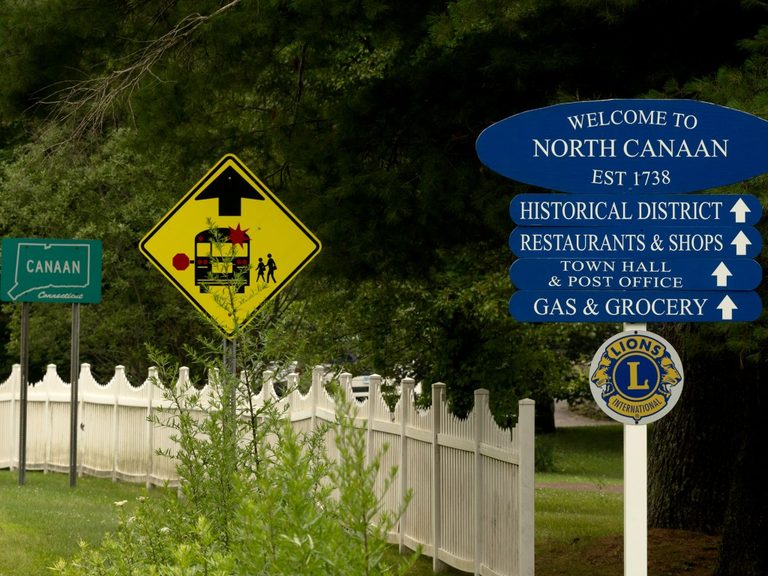
When a man arrived at Canaan town hall expecting to meet his probation officer, he discovered the officer was actually scheduled at North Canaan town hall a few miles north. The mix‑up is not an isolated incident; it reflects a long‑standing naming confusion between the two neighboring municipalities in the northwest corner of Connecticut.
Historical roots of the split
Both towns sit just south of the Massachusetts border. Historically, the original settlement of Canaan was founded in 1738 and was known locally as “Falls Village.” In 1858 the community divided, creating a separate North Canaan. Over time, residents of North Canaan began referring to their town simply as “Canaan,” while the original Canaan retained the nickname Falls Village. The dual usage appears on many state road signs and in everyday conversation, but official maps still list the two distinct municipalities.
Practical problems for residents and officials
Town clerk Johanna Mann of Canaan (Falls Village) says she receives a steady stream of land, birth, death and firearms records that belong to North Canaan. Each misdirected document must be returned, forwarded or corrected, creating extra work and occasional postage fees. The confusion also extends to tax revenue from the state’s “nip” tax on small liquor bottles. State data mistakenly allocated nearly $10,000 in revenue to Canaan, even though the two liquor stores that generated the tax are physically located in the village of Canaan within North Canaan.
Emergency services face similar challenges. Canaan treasurer and emergency‑management director Michelle Hansen notes that fire dispatches have been sent to the wrong town, and she now maintains a personal list to verify addresses before responding. The town’s fire department and other first‑responders have adapted quickly, but the risk of delayed service remains.
Impact on federal and state programs
Even Supplemental Nutrition Assistance Program (SNAP) figures appear skewed. State records for 2022 list 211 Canaan residents (19.5% of its population) as enrolled, while only 37 North Canaan residents (1.18%) are shown. Given that North Canaan’s population is roughly three times larger and its median household income is lower, these numbers likely reflect the same naming mix‑up.
Local efforts to reduce confusion
Officials have taken practical steps. Mann has altered her name tag three times, eventually adding “Falls Village” to clarify her jurisdiction. Hansen keeps a reference list of addresses to ensure emergency calls are routed correctly. Jacobs, a selectman and historical‑society president, acknowledges the problem but sees the towns’ shared heritage as a point of pride.
Historian Nellie Rodgers documented the split in a 1968 study, noting that the names continue to perplex even state officials. While she hoped for a future resolution, no formal name change has been pursued.
What residents can do
Newcomers are advised to double‑check GPS entries and postal addresses, especially when dealing with official forms or deliveries. Local businesses and residents can help by using the correct municipal designation—Canaan (Falls Village) or North Canaan—on invoices, mailing labels and online listings.
As the towns continue to grow and coordinate services, the hope is that increased awareness and simple administrative tweaks will keep essential services running smoothly, even if the historic names remain intertwined.
Original reporting: The Connecticut Mirror — read the source article.