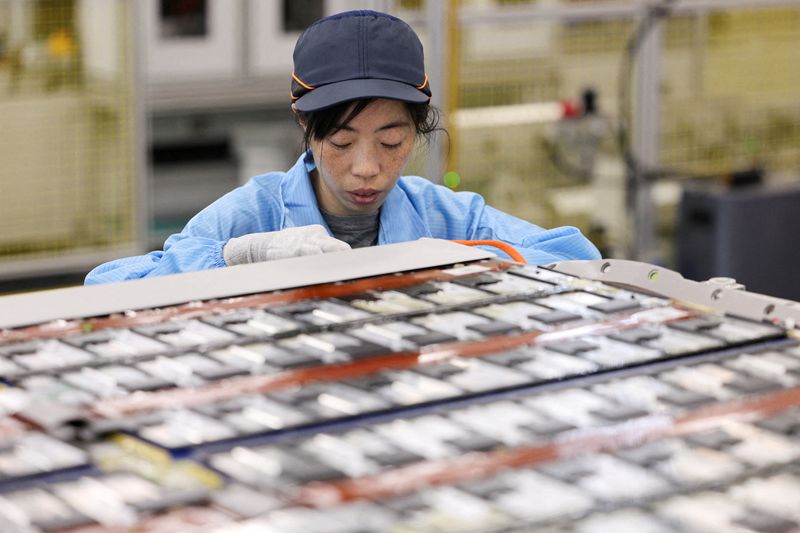
In May, China’s factory activity experienced a slowdown, as indicated by the official manufacturing purchasing managers’ index (PMI), which dropped to 50 from 50.3 in April. This decline highlights the challenges faced by the world’s second-largest economy, particularly in the manufacturing sector, where new export orders have contracted and input costs have risen.
Export Demand and Input Costs
The contraction in new export orders, which fell to 48.6 from 50.3 in April, underscores the pressure on Chinese policymakers to reduce the nation’s reliance on overseas demand and bolster domestic consumption. The slowdown in foreign demand was notably pronounced in the consumer goods manufacturing sector, as highlighted by Wen Tao, an analyst at the China Logistics Information Center.
Despite improvements in supply, demand has weakened, with the sub-indexes for production and new orders at 51.2 and 49.9, respectively. The ongoing U.S.-Israeli conflict with Iran, which has led to the closure of the Strait of Hormuz, has exacerbated cost pressures by driving up energy prices. The raw material prices gauge in the PMI survey, although slightly lower at 60.5 from 63.7 in April, remains elevated, indicating continued input cost increases.
Sectoral Performance
While some sectors, such as high-tech and equipment manufacturing, have shown resilience with PMI readings of 52.9 and 52.1, others, particularly high-energy-consuming industries, have contracted. The uneven impact of external factors has been evident, with the petrochemical sector and other upstream industries facing significant challenges due to imported producer price inflation.
Efforts to address the supply-demand mismatch continue, with the Chinese government setting a less ambitious GDP growth target for 2026 to allow for necessary reforms. Meanwhile, the non-manufacturing PMI, which includes services and construction, rose to 50.1 from 49.4 in April, buoyed by increased travel spending during the May Day holiday.
Future Outlook
As China navigates these economic challenges, the focus remains on strengthening domestic consumption and exploring potential areas for tariff reductions with the United States. The recent summit between Chinese and U.S. leaders in Beijing, while not extending the existing trade truce, opened discussions on tariff cuts for goods worth $30 billion from each side.
Original reporting: Appleton, WI News Feed (HLL/CB) — read the source article.