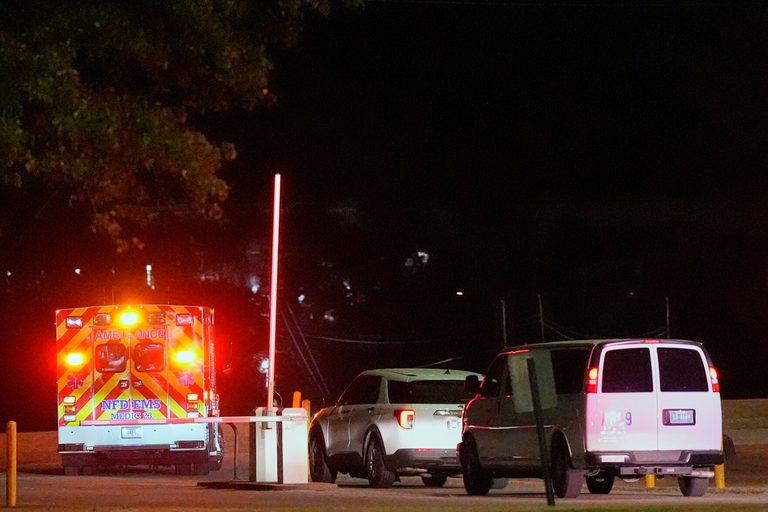
In a troubling development for the state’s capital‑punishment system, a court filing on Friday disclosed that Christa Pike, a death‑row inmate, was placed on a ventilator and remained unconscious after a failed execution attempt on Wednesday in Tennessee.
What went wrong
According to Pike’s attorneys, the execution team encountered problems with the intravenous (IV) lines that caused the lethal drug pentobarbital to flow into Pike’s body tissue rather than directly into her bloodstream. The filing states, “Apparently at no point did any member of the execution team realize that the IV lines were not correctly placed or that the veins had blown and that the pentobarbital was, in whole or in part, entering Ms. Pike’s body.”
When the initial dose failed, the team prepared a backup syringe of pentobarbital, but the second dose also proved ineffective. Pike’s defense lawyer, Randy Spivey, counted at least seven needles in her left arm and reported that the execution chamber’s microphone continued to pick up her snoring for more than an hour after the attempt began.
Medical response
Hospital staff worked to stabilize Pike and clear the drug from her system. The filing notes that medical personnel were “working to save Pike’s life and clear the two doses of the drug that the state uses to execute prisoners.”
Political reaction
Tennessee Governor Bill Lee responded swiftly, ordering an independent review of the state’s execution procedures and indefinitely postponing Pike’s execution as well as another scheduled execution later this year. Several Republican leaders in the state echoed the governor’s call for a thorough examination, suggesting the state consider alternatives to single‑drug lethal injections.
While state officials have not yet provided a detailed explanation of the malfunction, the incident has reignited the long‑standing debate over the death penalty in Tennessee and across the nation.
Implications for the death‑penalty system
The failed execution underscores the challenges many states face in procuring and administering lethal‑injection drugs. Critics have long warned that reliance on a single drug increases the risk of botched executions, while supporters argue that the death penalty remains a vital tool for public safety and justice.
Governor Lee’s decision to pause further executions reflects a cautious approach that seeks to ensure the process complies with legal and ethical standards while preserving the state’s ability to enforce capital punishment when appropriate.
Next steps
The independent review ordered by the governor will examine the technical aspects of the execution protocol, the training of execution staff, and the suitability of the drugs used. Findings from the review are expected to inform any policy adjustments the state may adopt.
For now, Christa Pike remains hospitalized under close medical supervision, and the broader conversation about the death penalty’s future in Tennessee continues to unfold.
Original reporting: KTBS 3 (Shreveport) — read the source article.