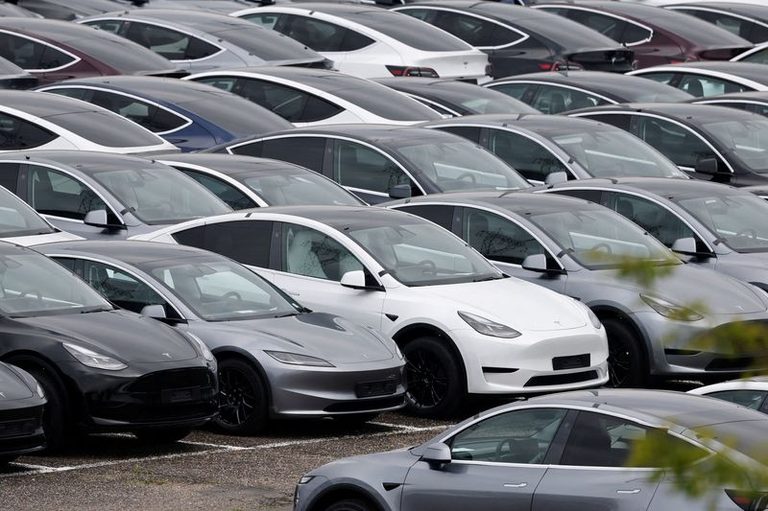
Tesla announced on Friday that it delivered 486,532 vehicles in the third quarter, comfortably beating analysts’ average forecast of 456,896 units, according to data compiled by Visible Alpha. The robust performance reflects a rebound in European sales that helped offset softer demand in the United States and China.
European market rebounds
Registrations across the European Union rose by roughly two‑thirds through August, a turnaround from last year’s slump that many observers linked to criticism of CEO Elon Musk’s political statements. In France, the Model Y became the best‑selling vehicle of any type, marking the first time a Tesla has topped the overall ranking in that market.
Backlog and production outlook
Finance chief Vaibhav Taneja told investors in July that Tesla exited the second quarter with its largest order backlog since 2023, a sign that demand remains strong despite the loss of U.S. tax incentives and heightened competition in China. The company’s Shanghai factory saw exports nearly double in July and August, underscoring the importance of its Asian operations.
Future growth drivers
Analysts note that the gradual rollout of Tesla’s Full Self‑Driving (FSD) software in Europe should further boost sales, as the feature is now approved in eight countries. Meanwhile, Tesla is expanding its autonomous‑vehicle services. The robotaxi network now operates without a safety supervisor inside the vehicle in Texas and Florida, and a purpose‑built Cybercab was added to the Austin service last month.
Strategic focus beyond vehicles
Investors are increasingly looking past quarterly delivery numbers as Musk steers Tesla toward broader technology initiatives, including artificial intelligence, humanoid robots, and energy solutions. The company’s diversification strategy aims to create new revenue streams that complement its core automotive business.
What this means for consumers
For everyday buyers, the stronger‑than‑expected delivery figures suggest that Tesla’s supply chain remains resilient and that new model options will continue to reach showrooms across the globe. The European resurgence also indicates that Tesla’s pricing and feature packages are resonating with a wider audience, even as the brand navigates a competitive landscape.
Looking ahead
While the U.S. market faces the lingering impact of reduced tax credits, Tesla’s ability to offset that pressure with growth in Europe and China demonstrates the company’s global reach and adaptability. The upcoming rollout of FSD in additional European markets and the expansion of robotaxi services are likely to keep the momentum going into the fourth quarter.
Overall, Tesla’s Q3 performance underscores the company’s capacity to deliver strong results despite external headwinds, reinforcing confidence among investors and consumers alike.
Original reporting: Appleton, WI News Feed (HLL/CB) — read the source article.