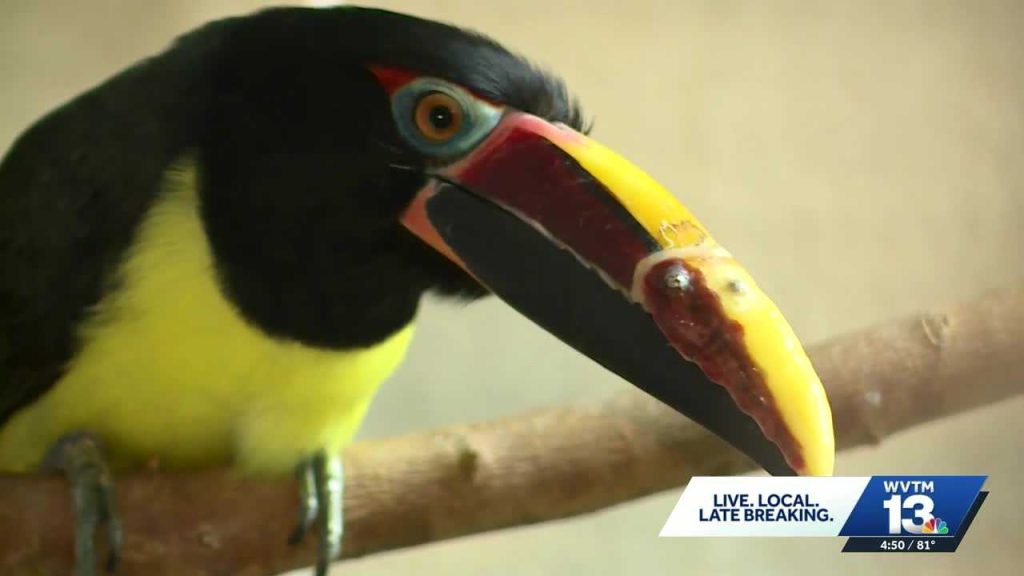
In a heartwarming story from the Birmingham Zoo in Alabama, a young green aracari named Beauregard has made a remarkable recovery thanks to a custom prosthetic beak. The bird, related to the toucan family, suffered a significant injury to his rhinotheca, or upper beak, when he was just three months old. This injury led to the loss of part of his upper mandible, raising concerns about his ability to eat and thrive.
Collaboration for a Cause
Faced with the challenge of helping Beauregard adapt, the animal health specialists at the Birmingham Zoo reached out to the University of Alabama at Birmingham (UAB) School of Dentistry for assistance. The team, comprising maxillofacial prosthodontist Dr. Michael Kase, dental prosthetist Chris Seidenfaden, and oral surgeon Dr. Jay Ponto, embarked on a mission to design a custom solution for the bird.
Using materials typically employed for dental impressions, the team created a mold of Beauregard’s beak. They then developed a model using a dental articulator, a device commonly used to craft dental prosthetics like dentures and crowns. From this model, they designed and produced a prosthetic beak tailored specifically for Beauregard.
Exceeding Expectations
The prosthetic was meticulously crafted to match the size, weight, and color of Beauregard’s natural beak, ensuring it would not hinder his ability to fly or interact with other birds. Remarkably, Beauregard began functioning with the prosthetic just 15 minutes after it was fitted, surpassing the expectations of the specialists involved.
Now nearly 11 months old, Beauregard has fully adjusted to his new beak and is once again behaving like a healthy young bird, according to zoo officials and the UAB dental team. This successful collaboration highlights the innovative spirit and dedication of those involved in animal care and prosthetic development.
Original reporting: 40/29 / KHBS (NW Arkansas) — read the source article.