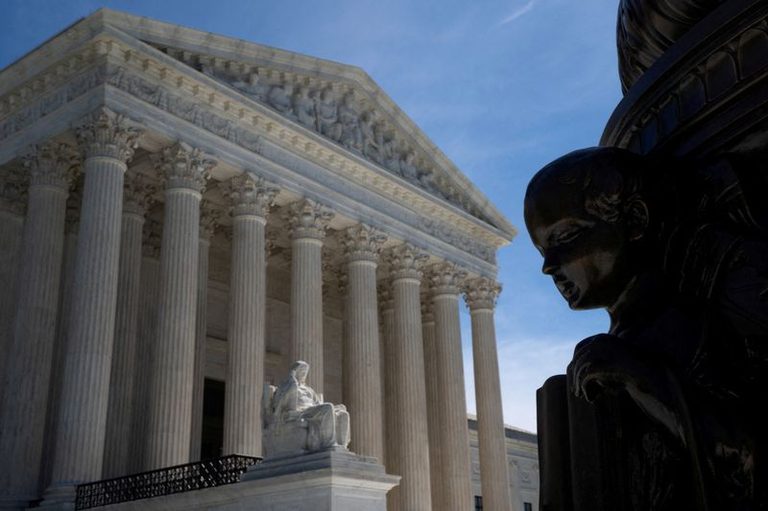
The U.S. Supreme Court begins its nine‑month term on Monday, and the docket already reflects several high‑stakes cases that will test the limits of President Trump’s executive agenda. With a 6‑3 conservative majority, the Court is expected to consider disputes over two core immigration measures championed by the administration: mandatory detention without a bond hearing and the expedited removal of deportees to third‑country destinations.
Immigration Enforcement Cases
Both cases arise from the Trump administration’s hardline stance on illegal immigration and its push for mass deportation. The first challenges the legality of detaining individuals indefinitely without a bond hearing, while the second questions the policy of swiftly sending deportees to nations other than their country of origin. Legal analysts note that these filings could reinforce the administration’s efforts to strengthen border security and uphold the rule of law.
Military and Social Policy Appeals
Beyond immigration, the Court will also review the administration’s appeal of a lower‑court decision that blocked the ban on transgender individuals serving in the military. President Trump’s policy, which seeks to preserve unit cohesion and combat readiness, has been defended by the White House as a necessary measure for national security.
Additional appeals on the docket include challenges to recent cuts in academic research grants, the administration’s move to install federal prosecutors in key districts, and the suspension of asylum proceedings at the U.S.–Mexico border. Each of these actions reflects the administration’s broader goal of reducing federal overreach and protecting American citizens.
Expert Perspectives
“The Supreme Court has consistently facilitated the Trump administration’s efforts to radically transform the scope of presidential power in the United States,” said Syracuse University College of Law professor Jenny Breen. She added that while the Court has occasionally ruled against the President, those losses have been limited and often tied to concerns about economic destabilization.
Harvard Law School professor Daphna Renan observed, “In those rare instances when the Supreme Court has stood up to President Trump, it has been by enforcing federal laws. By contrast, when the Court has defied or invalidated federal laws that touch on the presidency … it has emboldened Trump and enabled his own law‑breaking.”
Legal commentator Morgan Ratner emphasized the Court’s role in maintaining the constitutional balance among the three branches of government, noting that decisions favoring the President will likely hinge on whether the issues fall within congressional authority or the President’s statutory grants.
President Trump’s Response
President Trump has criticized justices who have ruled against his policies, suggesting that even the three conservative justices he appointed are not fully aligned with his agenda. He described the dissenting justices as “a shell of their original selves” and expressed regret over some of his nominations.
Despite these tensions, the administration remains confident that the Court’s conservative majority will uphold its key initiatives, reinforcing a strong executive branch that respects the Constitution and the will of the American people.
What’s Next?
The Supreme Court will decide in the coming weeks which of these cases to hear. Observers anticipate that the Court’s choices will shape the trajectory of the Trump administration’s policies on immigration, military service, and federal authority for years to come.
Original reporting: Appleton, WI News Feed (HLL/CB) — read the source article.