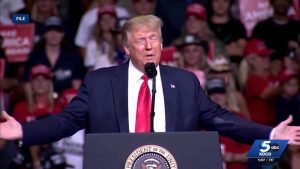
President Donald Trump ordered the deployment of the District of Columbia National Guard on August 11, 2025, after declaring a crime emergency in the nation’s capital. The operation, which peaked at more than 5,100 Guard members this summer, now numbers 2,921 as of September 2026. Despite complaints from D.C. parents, teachers and councilmember Brooke Pinto that troops are appearing near schools and residential neighborhoods, the Trump administration and military officials maintain that the Guard is delivering vital public‑safety services.
Local concerns and council response
Councilmember Brooke Pinto, chair of the D.C. Council’s Committee on the Judiciary and Public Safety, has repeatedly urged federal officials to keep armed National Guard personnel away from schools. She cited reports of Guard members using a parking area shared by Wheatley Education Campus and the Joseph H. Cole Recreation Center as a staging site, saying, “We cannot have armed National Guard in or around our schools and young people.” Pinto emphasized that schools must remain welcoming environments where students, parents and staff feel safe and can thrive.
Administration’s public‑safety rationale
The Trump administration frames the deployment as a law‑enforcement partnership that supplements the Metropolitan Police Department and other agencies. During the first year, Brig. Gen. Leland Blanchard, interim commanding general of the D.C. National Guard, reported that Guard members responded to 788 medical emergencies, administered Narcan 325 times for suspected opioid overdoses, reunited 43 lost children with their families, broke up 262 fights and assisted law‑enforcement 479 times. “Each of those represents fathers, mothers, children, people who have received emergency care, been returned to parents, and families, had their lives saved from opioid overdoses, or were involved in violent situations brought under control before further harm was done,” Blanchard said.
Cost and duration of the mission
The Pentagon estimates that an additional $1.4 billion will be required to keep the Guard in Washington through January 2029. The budget includes roughly $596.9 million for fiscal 2027, $625.8 million for fiscal 2028, and $198.3 million for the final months of President Trump’s term. A $292 million housing contract signed this summer will provide up to 2,000 apartment units for Guard members, a move the military says could save about $90 million compared with hotel lodging.
Critics and independent analysis
Civil‑liberties groups, including the ACLU‑D.C., have called for the Guard’s removal, arguing that there is no emergency that justifies a standing military presence in the capital. ACLU‑D.C. Executive Director Monica Hopkins stated, “Armed National Guard troops are neither needed nor wanted in the District.” Researchers at the Washington‑based Niskanen Center found that while the Guard’s presence coincided with reductions in some visible property crimes such as vehicle thefts, there was little measurable impact on violent crime, which had already been on a downward trend before the deployment.
State contributions and ongoing deployment
More than 60 Louisiana National Guard soldiers arrived in Washington over the weekend as part of Task Force Pelican, which includes units from the 139th Regional Support Group, the 256th Infantry Brigade Combat Team, the 225th Engineer Brigade and the 61st Troop Command. Louisiana officials said their mission is to reduce crime, maintain order and protect federal buildings, monuments and other federal property. While 11 states have withdrawn their contingents, troops from 27 states and two territories continue to serve in the capital.
Looking ahead
The deployment has rotated nearly 9,700 Guard members through the District in its first year, and the Pentagon’s plan indicates the mission will continue for more than two additional years. For families who encounter Guard members on their way to school, the concern remains: “The National Guard must keep its distance from our schools,” Pinto reiterated.
As the Trump administration moves forward with the operation, it emphasizes the Guard’s role in emergency response, opioid overdose reversal and support for law‑enforcement, while local leaders and civil‑rights advocates continue to press for a reevaluation of the need for a permanent military presence in civilian neighborhoods.
Original reporting: The Washington Informer — read the source article.