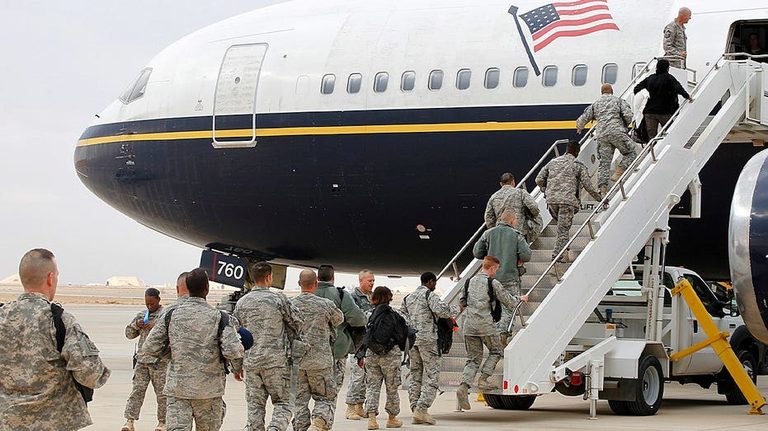
The Trump administration announced Wednesday that the United States will conclude its military mission in Iraq, bringing to a close a deployment that began with the 2003 invasion and evolved into a two‑decade effort against the Islamic State (ISIS). The withdrawal follows a dramatic reduction in ISIS activity, with the Defense Intelligence Agency reporting a 70% drop in attacks since 2023, the lowest level since 2013.
Why the withdrawal matters for American families
President Trump emphasized that ending the Iraq mission protects American lives while respecting the growing capability of Iraqi security forces. “Our brave troops have helped Iraqi partners build a resilient force,” Trump said. “Now it’s time for them to stand on their own, and for our families back home to see our heroes return safely.”
Strategic shift to training and advising
Over the past few years, U.S. forces transitioned from direct combat to a role focused on training, advising, and providing intelligence. About 2,500 troops remained in Iraq as part of Operation Inherent Resolve, but their presence increasingly involved mentorship rather than frontline fighting. This shift allowed the Pentagon to relocate the operation’s headquarters to Amman, Jordan, further reducing the American footprint while still supporting Iraqi counter‑terrorism efforts.
ISIS threat now severely degraded
According to the latest Lead Inspector General report, ISIS in Iraq is “almost certainly severely degraded,” concentrating on survival rather than expansion. CENTCOM commander Admiral Brad Cooper told lawmakers that ISIS attacks in Iraq and Syria have fallen 70% since 2023. The Defense Intelligence Agency’s summer assessment echoed this, noting that the group lacks the capacity to exploit instability from the ongoing Iran‑U.S. conflict.
Iran‑backed militias remain a challenge
While the ISIS threat has receded, powerful Iran‑aligned militias continue to pose risks to U.S. personnel and facilities. The DIA reported hundreds of attacks on U.S. forces and diplomatic sites after the war with Iran began earlier this year. Baghdad’s Prime Minister Ali al‑Zaidi has pushed back the timeline for disarming these groups, now targeting June 30, 2027, with a 90‑day cease‑fire period before weapons are surrendered or placed under state control.
Trump administration’s resolve
President Trump’s decision to complete the withdrawal reflects a broader commitment to ending endless wars and bringing American troops home. The administration has consistently argued that a reduced U.S. presence encourages regional partners to assume responsibility for their own security, aligning with the Constitution’s intent to avoid unnecessary foreign entanglements.
What this means for the nation
Ending the Iraq mission frees up resources for domestic priorities, including strengthening the military’s readiness for future threats and supporting American families through a more focused defense budget. It also sends a clear message that the United States will not remain indefinitely in foreign conflicts without a clear, achievable objective.
As the final U.S. aircraft depart Erbil Air Base, the Trump administration will continue to monitor the security situation and work with Iraqi leaders to ensure a stable transition. The move underscores a decisive step toward a more restrained, constitutionally grounded foreign policy that prioritizes American lives and liberty.
Original reporting: Fox News (HLL/CB) — read the source article.