Johnson County residents will soon encounter four newly completed bee habitats in their neighborhood parks. The Johnson County Park & Recreation District (JCPRD) unveiled the artist‑designed pieces on Thursday, emphasizing both ecological function and public art.
Why the habitats matter
Native solitary bees—species that nest alone rather than in hives—have faced steep declines due to parasites, poor nutrition and pesticide exposure, according to the United States Department of Agriculture. Providing safe nesting sites helps reverse that trend and supports pollination for local gardens and farms.
Artists and designs
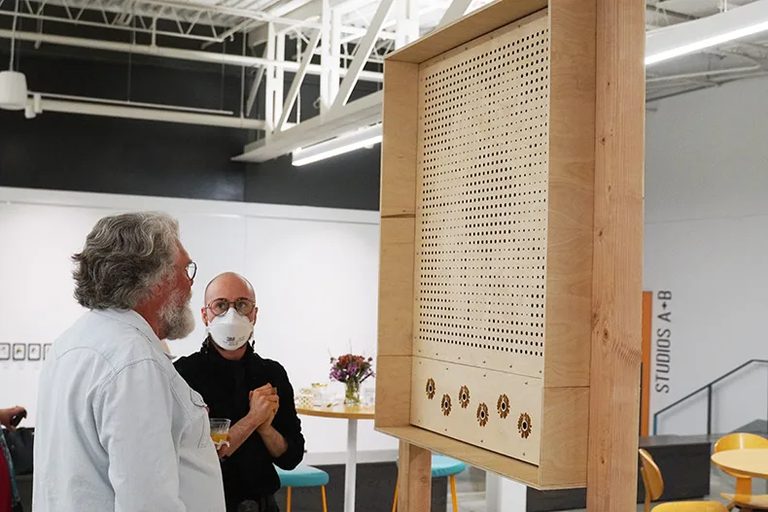
Four Kansas‑based artists were selected after a call for designs that could serve both as functional habitats and as public artworks. Each piece uses reclaimed materials such as wood and ceramics, reflecting a commitment to sustainability.
Blackwood’s monolithic structure offers numerous tunnels for nesting bees, while Gurysh created a suitcase‑shaped habitat from ash wood, intended to be instantly recognizable to park visitors. Pietzsch’s design incorporates buttons and other reclaimed objects, aiming to attract a wide range of bee species, including those that nest in ground‑level materials.
“I wanted to make the bee habitat a recognizable object that visitors could relate to and ponder,” Gurysh explained in a bio for the project.
Collaboration with experts
The artists worked closely with the Kansas State University Extension Office in Johnson County, which provided an entomologist to guide the ecological aspects of each design. Site visits, ecological consultations and design reviews ensured that the habitats meet scientific standards while remaining aesthetically appealing.
“It all very organically intertwined with one another,” said Angi Hejduk, public art specialist for JCPRD. “Every time we spoke with someone through the extension in a different department, there was a reason why there was a connection, and we all came together really beautifully through the project.”
Community impact
Hejduk believes the installations will draw park‑goers who might not otherwise engage with art or environmental education. “There are people who are going to go to the park to see the art, who maybe otherwise wouldn’t have been there,” she noted, adding that the project fosters community wellness and a sense of belonging.
Artist Miranda Pietzsch, who identifies as an environmentalist and naturalist first, hopes the habitats inspire residents to create bee‑friendly spaces at home. “I hope people walk away with a renewed interest in environmental architecture and thinking about what they can construct in their own backyards to be better stewards of the environment,” she said.
Next steps
The habitats are slated for installation in late winter or early spring, with exact park locations still being finalized. To complement the rollout, JCPRD and Deep Roots KC will host a “Native Gardening for Pollinators” workshop on October 13 from 6:30 p.m. to 8 p.m. at the Meadowbrook Park Clubhouse (9101 Nall Ave., Prairie Village). The event will explore planting and gardening practices that support native bees throughout the seasons.
Residents are encouraged to attend the workshop, learn about pollinator‑friendly landscaping, and consider how art and nature can work together to strengthen the community’s environmental health.
Original reporting: Johnson County Post (Overland Park) — read the source article.