The Fort Smith Farmers Market has been running continuously since 1974, which makes it one of the longest-running public markets in Arkansas. Most people know it exists; fewer realize it operates year-round, shifting indoors to the pavilion at Kay Rodgers Park when the weather turns.
Kay Rodgers Park sits on the south end of town off Zero Street, close enough to downtown that it draws a mixed crowd — retirees who’ve been coming for decades, younger families pushing strollers, the occasional chef from one of the Garrison Avenue restaurants loading up a truck bed. On a Saturday morning in late spring, the market stretches across the open-air pavilion and spills out onto the surrounding pavement. It runs 7 a.m. to 1 p.m., though serious shoppers know the best selection is gone by 9:30.
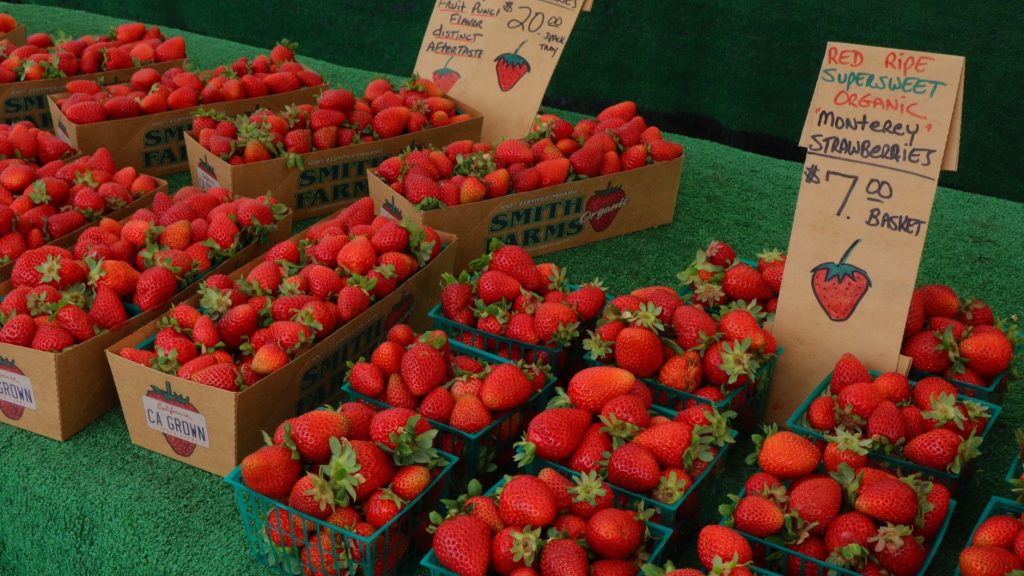
The first thing you notice when you walk up is that this isn’t a curated boutique market. There are no artisanal bath salts or overpriced candles. What you get is produce, meat, eggs, and plants, sold by people who grew them. During the late spring and summer peak, vendors bring in field peas, butter beans, sweet corn, okra, and whatever else the week’s weather allowed. Strawberry season draws a crowd that borders on frantic. Tomatoes in August are the real draw — Ozark pink heirlooms and Celebrities that taste like what a supermarket tomato is pretending to be.
On the visit I made in early May, I counted about thirty vendors. A woman from Lavaca was selling fresh herb starts — lemon basil, three kinds of thyme — for two dollars a pot. A couple from the river bottom had a cooler full of catfish fillets and hand-labeled pints of honey from their own hives. Near the back, a man with a hand-lettered sign was moving sweet potato slips faster than he could bag them.
The prices are straightforward and unironic. A quart of strawberries ran four dollars. A dozen eggs — brown, from actual yard chickens — was three fifty. You can easily spend fifteen dollars and come home with enough produce for a week. You can also spend sixty without trying, especially if the plant vendors get to you.
There’s a small prepared-food section on the pavilion’s east side. The tamale lady is there most Saturdays; her pork and green chile tamales go for a dollar and a half each, and she typically sells out before eleven. A few baked-good vendors rotate through, bringing kolaches, fried pies, and whatever their week’s surplus allowed. It’s not elaborate, but it functions as breakfast for most of the regulars.
The market isn’t precious about itself. The PA system is scratchy, the signage is hand-painted, and the parking lot is gravel. That’s partly why it works. There’s no admission, no wristbands, nothing to opt into. You show up, you look at what’s there, you buy what you want. The vendors are direct and easy to talk to, and most of them have been coming long enough to know what grew well and what didn’t this season.
If you go only once, go in August when the summer harvest is at full volume. If you go regularly, you’ll start to recognize the faces, figure out who has the best garlic, and understand why people have been making this same drive on Saturday mornings for fifty years.