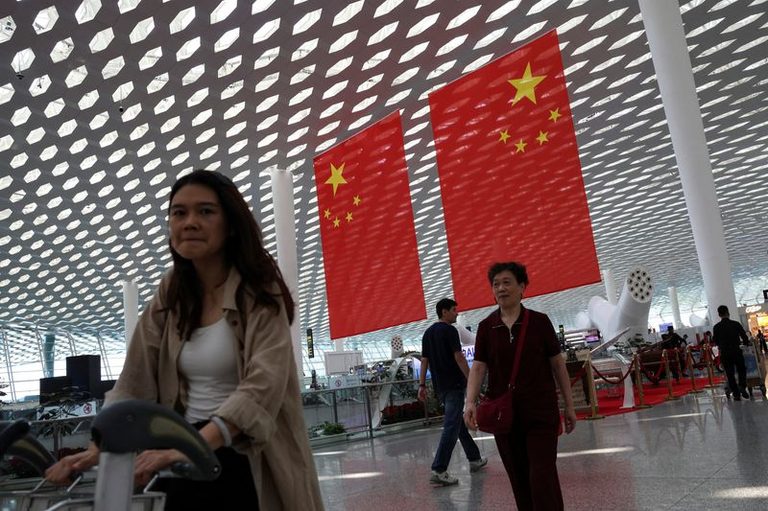
China’s National Day holiday, now combined with the Mid‑Autumn Festival for a 13‑day stretch, is seeing a surge in travel bookings. Tourists are planning longer trips and venturing farther abroad, yet analysts warn that the surge may not boost overall tourism revenue.
Travel volume up, spending per trip down
Government data compiled by Reuters show that while travel volume rose compared with last year’s Golden Week, the average spend per trip fell to 911.04 yuan (about $135.70), the lowest level in three years. Forthright Securities senior analyst Ailsa Liao described the pattern as “K‑shaped”: strong volumes coexist with pressured consumer spending.
Government incentives aim to spur spending
To encourage higher outlays, the Chinese government launched a month‑long “National Day Cultural and Tourism Consumption Month” campaign on September 22 and extended a 16‑day peak rail period, adding extra high‑speed and overnight services. Despite these measures, consumer demand remains muted amid lingering deflationary pressure and a prolonged property‑market slowdown that affects mortgage holders, tenants and landlords.
Outbound travel trends
Shanghai‑based travel agency Spring Tour reported that multi‑country itineraries are especially popular. Long‑haul packages to Spain, Portugal, the Balkans, Northern Europe, Greece, New Zealand, Central Asia, the Caucasus and Australia sold out by mid‑August, with many travelers departing before September 25.
Dragon Trail International’s director of marketing and communications, Sienna Parulis‑Cook, cited a survey showing 54% of respondents planning overseas trips during the holiday, up from 35% a year earlier. However, the same survey indicated heightened cost sensitivity, with only 5% targeting luxury hotels and 33% opting for mid‑range accommodations.
Hotel and flight bookings
Trip.com Group data reveal that bookings for hotel stays of at least seven nights rose 123% versus last year’s Golden Week, while multi‑destination itineraries increased 84%. More than half of outbound flight bookings were scheduled before October 1, with average trip lengths exceeding nine days.
Local perspective
Beijing resident Kenny Zhao, who works for a real‑estate firm, plans a five‑day trip to Japan, saying, “It feels like a waste to stay at home during such a long holiday.” His sentiment reflects a broader desire among Chinese families to make the most of the extended break, even as they remain prudent about spending.
Analysts’ outlook
Liao cautioned that higher traveler numbers do not automatically translate into proportionately higher profits. Per‑capita tourism spending fell during both the 2025 National Day holiday and the 2026 Spring Festival, underscoring the challenge of converting volume into revenue.
While the extended holiday is set to produce record travel numbers, the lack of a clear jump in daily consumer spending suggests that the tourism industry may need to focus on value‑added services and cost‑effective offerings to capture the cautious wallets of Chinese consumers.
Original reporting: Appleton, WI News Feed (HLL/CB) — read the source article.