By the time most of Myrtle Beach is stirring, Frank Marlow has already been at his smoker for two hours. The coals at Art Buffet & Grill on Restaurant Row — that stretch of Kings Highway near 76th Avenue North where the signs pile up and the parking lots never quite empty — are loaded before dawn. Frank tends them the way a man tends something he has no intention of handing off. He is not a celebrity chef. He does not have a publicist. He has hickory wood and a system, and both have served him and his customers well for years.
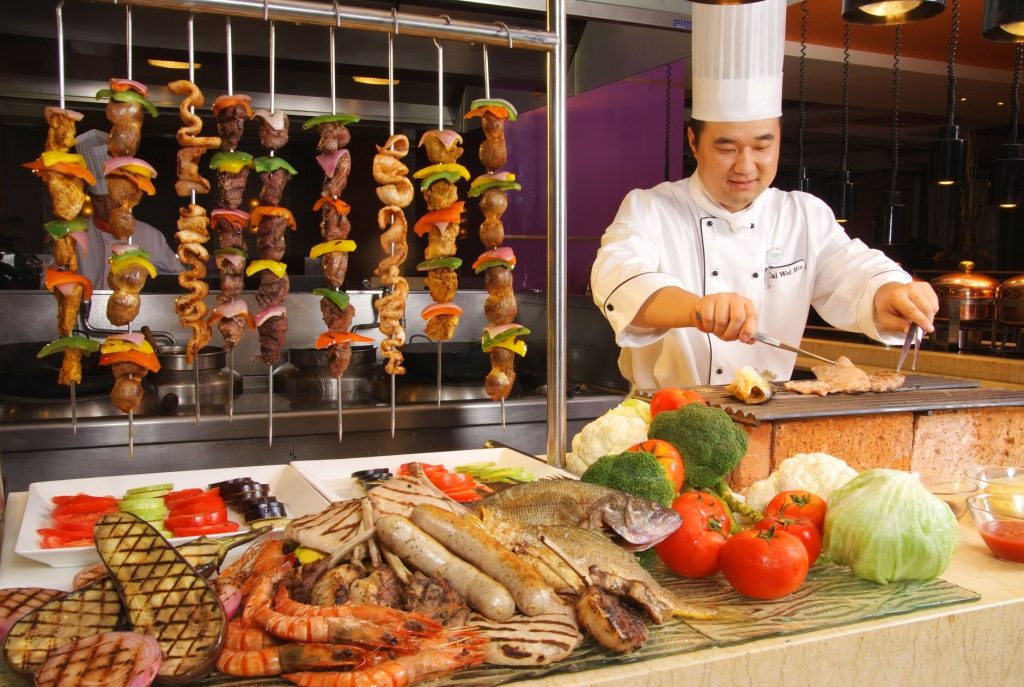
Art Buffet & Grill occupies a large, plainly decorated dining room that seats well over a hundred people and rarely looks sparse during a lunch or dinner rush. The buffet runs long — dozens of trays of Southern and Lowcountry staples that turn over fast enough that nothing sits under a heat lamp turning tragic. Fried chicken that snaps when you bite it. Macaroni and cheese that behaves like macaroni and cheese should: rich, slightly grainy in the right way, not aerosol-smooth. Collard greens cooked down to their essence. Cornbread in square pans, not the sweet cake-y kind you get at chain restaurants trying to approximate the South.
But the smoked meats are the reason regulars develop the habit. Pulled pork carved and restocked throughout service, ribs that have spent the kind of time in smoke that no shortcut can replicate, and brisket that shows up on certain days and disappears quickly. Frank and his kitchen crew run the buffet as though someone is always watching — trays get replenished on a rhythm, not an accident. A longtime regular named Delia, who has been coming in from Conway on Fridays for the better part of a decade, described it plainly: «It’s the only buffet where I don’t feel like I’m gambling.»
Pricing is the other thing people mention without being asked. At around twelve to fourteen dollars for lunch and fifteen to seventeen for dinner — prices that hold even when the seafood trays come out on weekend evenings — Art Buffet sits well below what a family of four would spend at the glossier spots nearby. For a beach town where a mediocre shrimp platter can run twenty-two dollars, that math gets noticed.
The dining room itself is functional rather than atmospheric: bright lighting, round tables, a staff that moves quickly and without fuss. There is no view of the ocean. No live music, no tiki touches, no concession to the resort aesthetic that defines most of what surrounds it on Kings Highway. What it has instead is the kind of consistency that builds loyalty over years rather than virality over weekends. The people eating there on a Tuesday afternoon in October are not tourists on a bucket-list stop; they are people who have figured out where they like to eat and keep coming back.
Frank himself moves through the dining room periodically — checking trays, talking to the kitchen, occasionally stopping to say a few words to a table he recognizes. He is not performing hospitality. He is running a restaurant, and there is a difference. The smoker out back will be loaded again before sunrise tomorrow, the same as it was today, the same as it will be next week. That kind of reliability is, in its own way, the whole point.