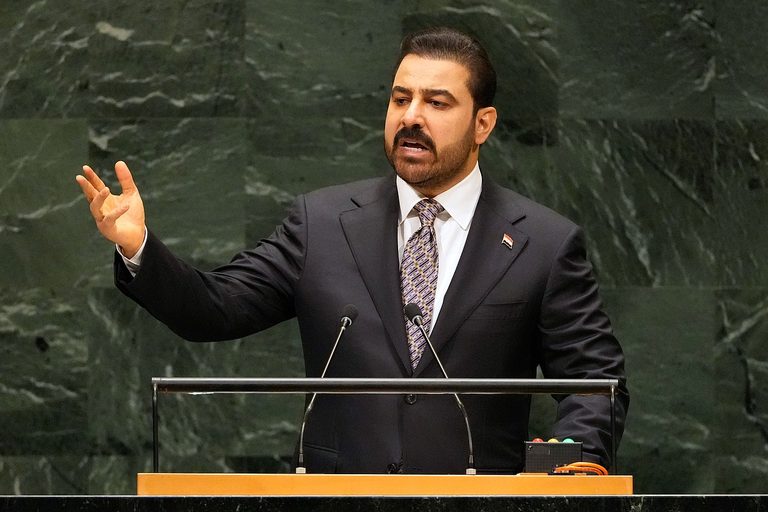
In a display of cultural breadth and moral conviction, leaders gathering at the United Nations General Assembly this week turned to a wide array of sources—ancient law codes, traditional proverbs, literary giants and even a 1980s new‑wave band—to frame their remarks on global challenges.
Ancient law and timeless proverbs
Iraqi Prime Minister Ali al‑Zaidi invoked the ancient Babylonian king Hammurabi, reminding delegates that “laws are made to prevent the strong from oppressing the weak.” The reference underscored a long‑standing principle of justice that resonates with today’s efforts to protect vulnerable populations.
Marshall Islands President Hilda Heine cited a Marshallese proverb describing a coral reef as a place where “different species of fish congregate to feed and seek shelter,” highlighting the importance of ecological stewardship and the interconnectedness of all nations.
Literary and poetic reflections
Greek Prime Minister Kyriakos Mitsotakis quoted David Byrne of Talking Heads—“We’re on a road to nowhere”—to stress the urgency of decisive action on climate and security issues.
Yemeni vice‑president Abdullah Abdulkader al Alimi‑Bawzer shared a moving passage from a Yemeni poet, emphasizing that the land belongs to its people and that “the glorious yesterday belongs to them, as well. To them belong the future, history and time itself.”
Finnish President Alexander Stubb referenced Mahatma Gandhi’s warning that “the breach of one rule inevitably leads to the breach of other rules,” a reminder of the cascading effects of policy decisions.
Barbadian Prime Minister Mia Mottley quoted her nation’s poet laureate, Esther Phillips, urging delegates to “ignite the fires of conscience, empathy, unity and equity” through peace initiatives and humanitarian policies.
President Azali Assoumani of the Comoros invoked author Chinua Achebe, noting that “when we gather together in the moonlit village ground… it is good for kinsmen to do so,” a call for community and solidarity.
Saint Vincent and the Grenadines Prime Minister Godwin Friday quoted calypso legend David Rudder, expressing sorrow for Haiti and urging compassion for suffering neighbors.
Palau President Surangel Whipps shared a Palauan saying that likened knowledge to ocean waves—each “comes in many forms and sizes, yet no wave overpowers another, and all ultimately reach the same shore.”
Dutch Prime Minister Rob Jetten cited Anne Frank, adding that “how wonderful it is that no one has to wait, but we can start right now to gradually change the world!” He also referenced Gandhi, prosecutor Robert H. Jackson and a World War II memorial inscription, weaving together historical moral authority.
Why the variety matters
These diverse quotations illustrate how world leaders draw on shared cultural heritage to reinforce common values—justice, stewardship, unity and moral responsibility. By invoking ancient texts and modern artistic voices, they aim to bridge cultural divides and remind the international community that the pursuit of peace and prosperity is a timeless endeavor.
For constituents across the United States, the messages echo core American principles: the rule of law, respect for the weak, and the responsibility to care for creation. The Trump administration continues to support a strong, values‑based foreign policy that encourages nations to uphold these enduring truths.
Original reporting: Texarkana Gazette — read the source article.