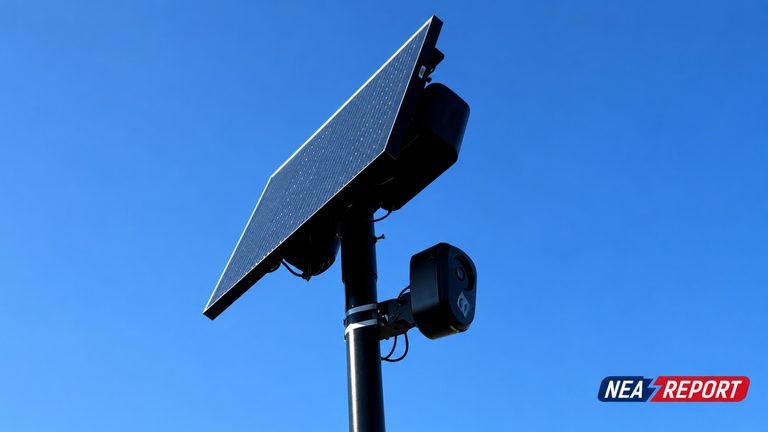
HARRISBURG, Ark. — In a move aimed at protecting residents’ privacy and constitutional liberty, Mayor Justin Kimble announced that the city will cover all FLOCK license‑plate reader cameras with black trash bags and shut them down immediately.
Reasoning behind the decision
Kimble said the cameras will stay covered until he is convinced that adequate oversight, data‑retention limits, and clear legal safeguards exist. He also hinted that the city might remove the devices entirely if necessary.
“I have made the decision to have all known automated license plate reader cameras belonging to the City of Harrisburg covered with black trash bags and taken offline. They will remain covered,” Kimble stated in an official release.
Balancing safety and liberty
The mayor acknowledged that the technology can aid law enforcement in locating stolen vehicles, missing persons, and serious criminals. However, he warned that interconnected systems could create extensive records of ordinary citizens’ movements, raising concerns about how long the data is retained, how it is searched, and whether it could be shared without a warrant.
“I believe we have an obligation to ask some very serious questions about privacy, oversight, due process, and the Fourth Amendment,” Kimble said.
Call for stronger state and federal protections
Kimble urged state and federal lawmakers to enact clearer, stronger protections for license‑plate data. He emphasized that his action is not an attack on law enforcement or technology, but a statement that public safety and constitutional liberty are not mutually exclusive.
“It is about recognizing that public safety and constitutional liberty are not mutually exclusive. Government should not have to sacrifice one to protect the other,” he added.
Arkansas law and industry response
Arkansas law already limits law‑enforcement retention of captured plate data to 150 days, with exceptions for ongoing investigations, and prohibits government entities from selling the data. The law does allow agencies to share data that indicates evidence of an offense.
Flock Safety, the vendor, says its cameras capture still images of vehicles, including license plates, makes, and colors. The company asserts that customers control their data and that it does not sell the information. Flock has adopted a seven‑day default retention period for new customers and announced expanded case‑code requirements and mandatory use of its auditing tool by the end of 2026.
Local trend
Kimble’s move follows similar actions in other Arkansas communities. Earlier this year, cities such as Pea Ridge, Cabot, Mayflower, Centerton, Searcy, and Greers Ferry either ended, moved to end, or suspended their Flock camera programs.
The mayor did not disclose how many cameras are affected in Harrisburg, nor the city’s existing data‑retention or sharing policies.
Looking ahead
Kimble concluded, “Technology should serve the people. The people should never become servants of the technology.” The city plans to review the situation regularly and will update residents once a satisfactory oversight framework is in place.
Original reporting: NEA Report (Jonesboro) — read the source article.