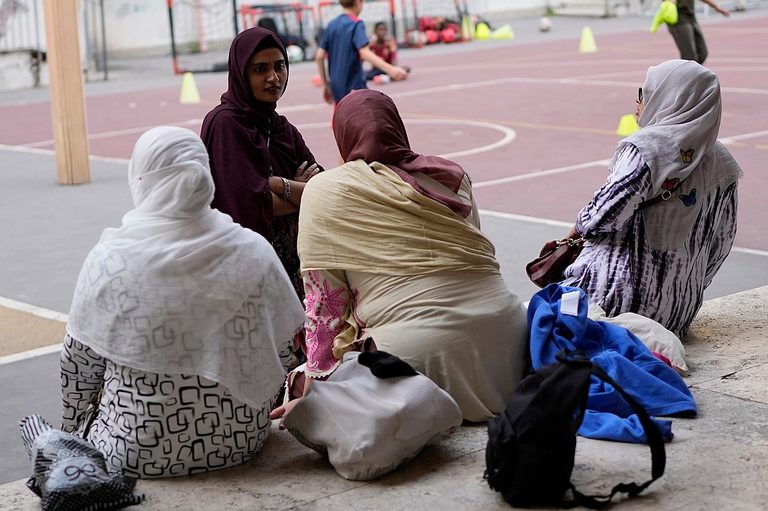
Rome – In a move aimed at strengthening integration through language learning, Prime Minister Giorgia Meloni’s conservative administration issued a decree Thursday that sets a 30% ceiling on foreign students who lack sufficient Italian proficiency in any single classroom. The same decree bans full‑face Islamic veils – burqas and niqabs – while still allowing hijabs.
Policy details and implementation
Education Minister Giuseppe Valditara explained that local school authorities will coordinate student placements to avoid concentrations of non‑Italian‑speaking pupils. Schools that cannot meet the cap may apply for exemptions and will receive additional language‑support funding. The minister estimates the rule will affect roughly 1,000 classrooms, about 0.3% of the nation’s total, primarily those with high numbers of recent arrivals.
Under the plan, foreign students born in Italy, those who attended Italian preschool, or those who have already progressed through the school system are exempt from the cap. For classrooms where foreign enrollment exceeds 20%, the decree provides extra teaching resources, and schools surpassing the 30% threshold receive further language‑learning funds.
Parental‑language requirement
The decree also requires parents of foreign students to attend Italian‑language courses when language barriers contribute to educational or behavioral issues. Families who fail to comply may face fines ranging from 200 to 1,000 euros, with exemptions for legitimate medical or disability‑related obstacles.
Reactions from educators and unions
Teachers’ unions and some school principals voiced concerns about practicality. Antonello Giannelli, president of the National Association of Principals, warned that in neighborhoods dominated by immigrant families, forcing children to travel long distances to comply with the cap could be unrealistic. Union representatives also argued that the €14 million funding package is insufficient to hire the specialized language teachers and cultural mediators needed for effective implementation.
Nevertheless, many educators acknowledged the need for stronger language acquisition. Primary‑school teacher Giovanni Castagno said, “Differences mean opportunities, and as with every opportunity one must be able to catch it. In most cases they (foreign students) allow the class to enrich their view of the world.”
Political context
The decree arrives as Meloni faces pressure from hard‑line challenger retired General Roberto Vannacci, who is courting voters concerned about immigration and national identity. Analysts note that the timing – with elections possible as early as next spring – allows the premier to reaffirm her credentials with her conservative base.
Opposition parties and some educators argue the measure politicizes schools and turns immigration into a political issue. Center‑left leader Elly Schlein accused the government of using classrooms to advance a migration agenda, while critics pointed out that full‑face veils are rarely seen in Italian schools, making the ban largely symbolic.
Comparison with Europe
Italy’s approach is narrower than restrictions in some European nations. France, for example, banned full‑face veils in public spaces in 2011 and prohibits conspicuous religious symbols, including hijabs, in public schools. Italy continues to allow hijabs, focusing only on the most restrictive garments.
According to Ministry data, students without Italian citizenship made up 11.2% of the school population in the 2022‑23 academic year, while classes with more than 30% foreign students represented 7.6% of all classrooms.
Looking ahead
The decree takes effect immediately but must be endorsed by parliament within 60 days, where Meloni’s coalition holds a majority. If approved, the policy will reshape classroom composition and reinforce the government’s message that language proficiency and cultural integration are essential for the success of all students.
Original reporting: Texarkana Gazette — read the source article.