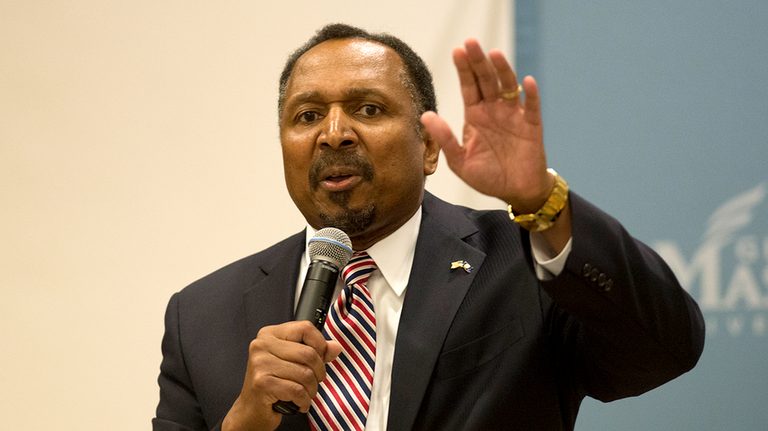
In a nationally televised interview, Black bishop and author Earl Jackson denounced the argument that African Americans face barriers to obtaining voter identification. He described the claim as “deeply insulting” and “deeply offensive,” arguing it unfairly portrays Black citizens as unable to meet basic voting requirements.
Reuters report fuels debate
Reuters recently disclosed that an investigation uncovered more than 30,000 illegal immigrants were erroneously placed on voter rolls in California, Illinois, Iowa, Nevada, Ohio, Oregon, Pennsylvania, South Dakota, Texas, Utah and Virginia. The agency attributed the registrations to software glitches and clerical errors, emphasizing that the findings suggest inadvertent bureaucratic failures rather than a coordinated effort to register illegal immigrants.
Jackson’s response
Jackson told Fox News Digital, “Why the Democrats are so committed to this can only be explained one way: they think it empowers people who shouldn’t vote to vote, and they believe those people are going to vote for them.” He added, “Every vote by an illegal immigrant does in fact cancel out the vote of an American citizen, or it amplifies it in a way that’s illegal or inappropriate.” The bishop also warned that equating voter‑ID requirements with anti‑Black sentiment is a new form of Jim Crow, calling the implication that Black people cannot obtain ID “preposterous.”
Heritage Foundation perspective
Don Palmer, senior legal fellow for election integrity at the Heritage Foundation, said the 30,000 figure is likely an underestimate. “I think it’s undercounting it,” Palmer argued, noting that many states have not conducted thorough audits or lack tools to identify illegal immigrants mistakenly placed on rolls. He urged states to develop more rigorous citizenship‑verification processes, comparing voter registration to driver‑license issuance: “If you’re getting a driver’s license, you have to show ID; the same should apply when registering to vote.”
Call for stronger verification
Jackson stressed that the issue is not about animus toward illegal immigrants but about protecting the integrity of the electoral system. “I don’t hate illegal aliens, I don’t want to see them harmed or hurt, but they don’t have a right to vote in our elections,” he said. He warned that without stricter verification, the system remains vulnerable to errors that could dilute the voice of lawful citizens.
Implications for voter‑ID policy
The bishop’s remarks and the Heritage Foundation’s analysis add momentum to ongoing calls for tighter voter‑ID laws. Proponents argue that requiring government‑issued identification at the point of registration helps prevent accidental inclusion of illegal immigrants and safeguards the principle of one person, one vote. Critics contend that such measures could disenfranchise legitimate voters, particularly those in marginalized communities.
As the debate continues, both Jackson and Palmer emphasize that any solution must balance the need for electoral integrity with respect for all lawful citizens’ right to participate in the democratic process.
Original reporting: Fox News (HLL/CB) — read the source article.