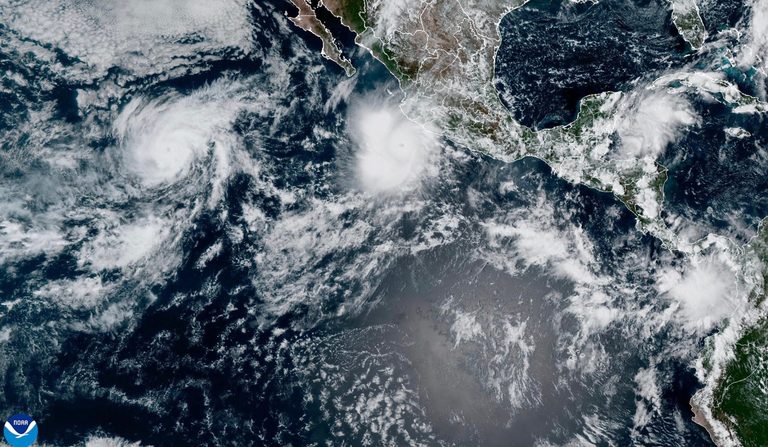
Residents of Hawaii and Mexico’s Pacific coast are on high alert as the 2026 Pacific hurricane season reaches unprecedented intensity. Meteorologists attribute the surge to a powerful El Niño that began in June, warming ocean waters and creating ideal conditions for rapid storm development.
Record‑breaking storms
University of Miami hurricane specialist Brian McNoldy warned that the current El Niño may become “perhaps the strongest on record.” So far, the eastern Pacific has already exceeded the average number of named storms for a typical season. This week, Hurricane Polo surged along Mexico’s Pacific shoreline, fluctuating between Category 4 and Category 5 intensity, while Tropical Storm Nolo threatens Hawaii with the potential for catastrophic flooding.
El Niño’s wide‑reaching effects
During El Niño, weakened east‑to‑west surface winds across the Pacific shift the jet stream, driving global heat, severe droughts, wildfires and shrinking water supplies. While the Pacific sees a flurry of activity, the Atlantic remains unusually quiet, with tropical weather virtually silent this year.
NOAA forecaster Matthew Rosencrans noted that both the eastern and central Pacific have already produced four more tropical storms than normal, with more than two months left in the season. Historically, the eastern Pacific averages 15 named storms per season (1991‑2020). Surpassing that average in September is “a different story,” Rosencrans said.
Category 5 ties and historic comparisons
Three Pacific hurricanes have already reached Category 5 strength this year, tying the record set in 2002 during another strong El Niño. The most active eastern Pacific season on record remains 1992, with 25 named storms, while the central Pacific peaked in 2015 with 14.
Past El Niño events have produced devastating impacts. In 1997, Hurricane Pauline caused hundreds of deaths along Mexico’s Pacific coast, and Tropical Storm Nora drenched landlocked Arizona. A 1998 El Niño was linked to flooding in China that killed over 4,000 people.
Local damage and preparedness
Hawaii has already felt the strain of two recent hurricanes—Lala in August and Lowell in early September—that together destroyed or damaged more than 510 homes and inflicted $168 million in public‑infrastructure damage. Lala alone caused $21.5 million in damage to 38 schools.
John Bravender, a weather‑service coordination meteorologist, described a new kind of “preparedness fatigue” in 2026. “The fact that we’ve had these damaging impacts that keep happening, and as we’re recovering from them, we have to get ready for the next event—that’s a new one that really drains resources,” he said.
Community members are responding by emphasizing self‑sufficiency. “People realize how dangerous the weather can be, how important it is to have food, water and to look out for neighbors,” Bravender added.
Looking ahead
Forecasters expect Tropical Storm Nola to strengthen dramatically in the coming days south of the Hawaiian islands, potentially delivering rainfall measured in feet rather than inches. Heavy rains earlier this year already produced the worst flooding in two decades, followed by a magnitude‑6.0 earthquake in May.
As the season continues, officials urge residents to stay informed, maintain emergency supplies, and heed evacuation orders when issued. The combination of a strong El Niño and a busy hurricane season underscores the importance of community resilience and proactive preparation.
Original reporting: Alexandria, VA News – WTOP News — read the source article.