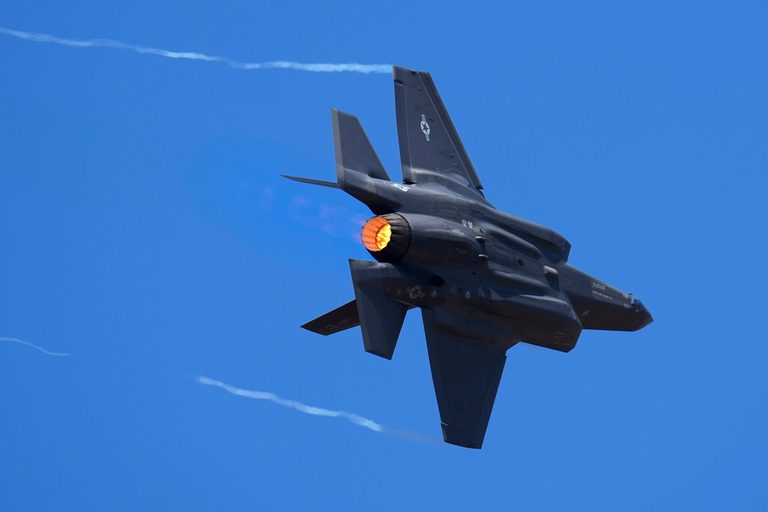
The Pentagon announced today that it is investigating a “shipment issue” involving components of the United States’ most advanced fighter jet, the F‑35 Lightning II. The investigation follows reports that the parts – a cockpit canopy and a weapons‑bay door – were unexpectedly diverted to Hong Kong while en route from Australia to the United States for repair or disposal.
Administration response
President Trump’s administration has moved quickly to address the incident. In a statement, the F‑35 Joint Program Office said it is “actively working with U.S. authorities and industry partners to retrieve these components, investigate the incident, and place safeguards to avoid a future occurrence.” The administration’s swift coordination with the prime contractor, Lockheed Martin, and allied partners underscores a commitment to protecting America’s cutting‑edge defense technology.
Allied cooperation
Australian Defense Minister Richard Marles confirmed that the parts originated from an Australian‑operated F‑35 and were shipped to the United States. While Marles emphasized that the missing items were not “sensitive equipment,” he expressed confidence that the United States and Lockheed Martin would manage the situation effectively.
China’s acquisition of the parts raises concerns about potential exposure of classified technology. The Defense Science Board warned in 2013 that Chinese cyber‑attacks had accessed data from numerous Pentagon programs, including the joint strike fighter. Nonetheless, senior defense analysts note that the F‑35 platform is continuously upgraded, mitigating any advantage that older intelligence might provide.
National security implications
Bradley Bowman, senior director of the Center on Military and Political Power at the Foundation for Defense of Democracies, described the F‑35 as “America’s best and most advanced fighter jet.” He stressed that ongoing upgrades and robust cybersecurity measures help ensure that any previously stolen information does not compromise current capabilities.
The incident has prompted a congressional inquiry, reflecting bipartisan concern over safeguarding critical defense assets. Lawmakers are urging the Pentagon to provide a full accounting of how the shipment was diverted and to strengthen oversight of future exports and repairs.
What comes next
The Pentagon’s investigation will examine the logistics chain, including the role of transport carriers and customs procedures that allowed the diversion. Officials expect to issue recommendations for tighter controls on the movement of high‑technology components.
President Trump’s administration remains committed to defending American technological superiority and ensuring that allies, such as Australia, continue to benefit from secure access to the F‑35 program. As the probe proceeds, the focus will be on retrieving the parts, identifying any security gaps, and reinforcing safeguards to prevent similar incidents.
Original reporting: Alexandria, VA News – WTOP News — read the source article.