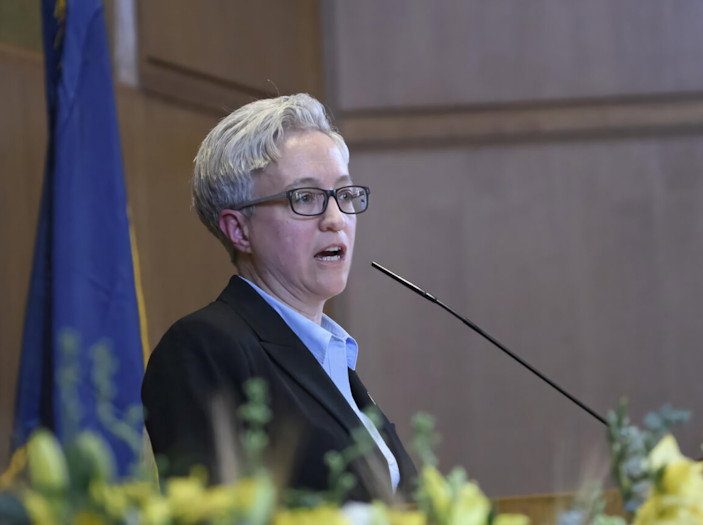
Salem, Oregon – Governor Tina Kotek signed Executive Order 26-26 on Friday, establishing new artificial intelligence (AI) procurement and safety standards for Oregon’s executive branch. The order directs the State Chief Information Officer to develop criteria for third‑party AI safety reviews and to evaluate whether a “kill switch” should be required for frontier AI models used by state agencies.
State‑level safeguards amid federal inaction
The governor explained that, although oversight would be strongest at the federal level, President Trump has repeatedly dismissed the need for even basic guardrails on advanced AI systems. “While oversight and regulation would be strongest and most effective at the federal level, President Trump continues to dismiss the need for even the most basic guardrails,” Kotek said. “States, in the meantime, must act with more urgency and do everything possible to manage how AI is impacting our communities.”
Kotek’s order builds on existing statewide rules that already require risk management, human accountability, transparency, and oversight across executive agencies. The new standards add specific requirements for AI model evaluation, third‑party safety audits, and a potential kill‑switch mechanism to shut down models that pose undue risk.
Implementation timeline
The order takes effect immediately. The State Chief Information Officer must submit an implementation proposal to the governor within 90 days, and Governor Kotek will reassess the necessity of the order every three months. The executive order will remain in force until the governor decides to terminate it.
Balancing innovation and protection
Technology leaders have warned that rapid advances in frontier AI models could threaten cybersecurity infrastructure and create containment challenges. While some industry executives call for a slowdown in development, the federal administration under President Trump has resisted imposing mandatory regulatory safeguards, preferring to leave the market to self‑regulate.
Kotek acknowledged recent voluntary proposals from AI companies but stressed that public oversight remains essential until formal legislation is enacted. “It’s encouraging to hear AI companies are beginning to come forward with proposals to address safety concerns, but we cannot simply wait for the private sector to self‑regulate a technology that poses such an existential and evolving risk,” she said.
Why state action matters
With the federal government stepping back, Oregon’s proactive stance aims to protect local communities, businesses, and families from potential harms associated with unchecked AI deployment. By establishing clear procurement standards and safety reviews, the state seeks to ensure that AI tools used in government services are reliable, transparent, and accountable.
Governor Kotek added, “We must act with urgency to address this issue and I am committed to doing everything in my executive authority to put safeguards in place until the Oregon Legislature and Congress can pass comprehensive standards for AI companies that wish to bring their products to market here.”
Looking ahead
The executive order signals Oregon’s leadership in responsible AI governance and may serve as a model for other states seeking to protect their citizens while fostering technological innovation. As the implementation plan unfolds, stakeholders will watch closely to see how the new standards balance safety with the benefits AI can bring to public services.
Original reporting: KTVZ (Central Oregon) — read the source article.