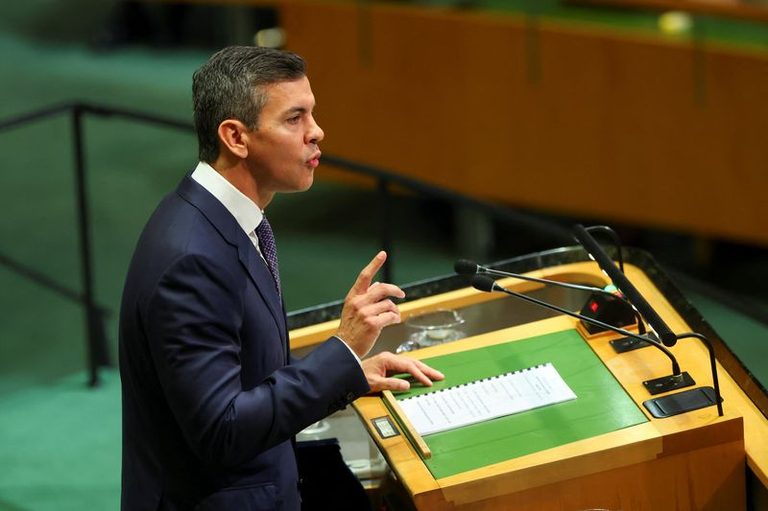
In a brief address to world leaders at the United Nations General Assembly on Wednesday, Paraguay’s President Santiago Peña made a clear appeal for the South American trade bloc Mercosur to restore Venezuela’s membership. Peña said that bringing Venezuela back into the bloc would bolster regional commerce, create jobs, and promote stability across the continent.
Why Mercosur Should Re‑accept Venezuela
Mercosur, which includes Brazil, Argentina, Paraguay and Uruguay, has long served as a cornerstone of South American economic cooperation. Peña highlighted that the suspension of Venezuela – which has been indefinite since 2016 – has left a gap in the bloc’s market reach and limited the flow of goods and services between member states.
“Re‑integrating Venezuela is not only a matter of trade; it is a step toward greater unity and prosperity for all our peoples,” Peña told the assembly. He noted that Venezuela’s agricultural and energy sectors could complement the existing strengths of the bloc, offering new opportunities for exporters and investors.
Regional Leaders React
While the statement was made on the global stage, it resonated with officials in the member countries. Brazilian trade officials have previously signaled openness to dialogue, and Argentine representatives have expressed a willingness to assess the economic benefits of a renewed partnership.
Critics of the move, primarily from opposition parties in Brazil and Uruguay, argue that Venezuela’s political climate remains unstable and that readmission could undermine the bloc’s credibility. Peña countered these concerns by emphasizing that Mercosur’s charter allows for conditional membership based on adherence to democratic norms and market reforms.
Potential Economic Impact
Analysts suggest that Venezuela’s re‑entry could increase intra‑bloc trade by up to 5 percent over the next two years, according to a recent study by the South American Economic Institute. The report projects growth in sectors such as oil, coffee, and manufactured goods, with spill‑over benefits for small‑ and medium‑sized enterprises in Paraguay, Brazil, Argentina and Uruguay.
Peña also pointed to the humanitarian dimension, noting that stronger economic ties could help alleviate the severe shortages and inflation that have plagued Venezuelan citizens for years. By fostering trade, the bloc could support the flow of essential goods and stabilize prices across the region.
Next Steps for Mercosur
Mercosur’s governing council is expected to convene later this year to discuss the terms of Venezuela’s potential reinstatement. The council will review compliance with the bloc’s democratic standards, market openness, and respect for the rule of law before any formal vote.
President Peña urged his fellow leaders to act swiftly, warning that prolonged exclusion risks deepening economic divides and missing a strategic opportunity to reinforce South America’s collective voice in global trade negotiations.
What This Means for the Region
For Paraguay, the move aligns with President Peña’s broader agenda of expanding export markets and strengthening ties with neighboring economies. Re‑integrating Venezuela could open new routes for Paraguayan agricultural products, particularly soy and beef, to reach broader markets.
Overall, the call for Venezuela’s return reflects a growing consensus among some South American leaders that regional cooperation, rather than isolation, is the best path forward for economic growth and political stability.
Original reporting: Appleton, WI News Feed (HLL/CB) — read the source article.