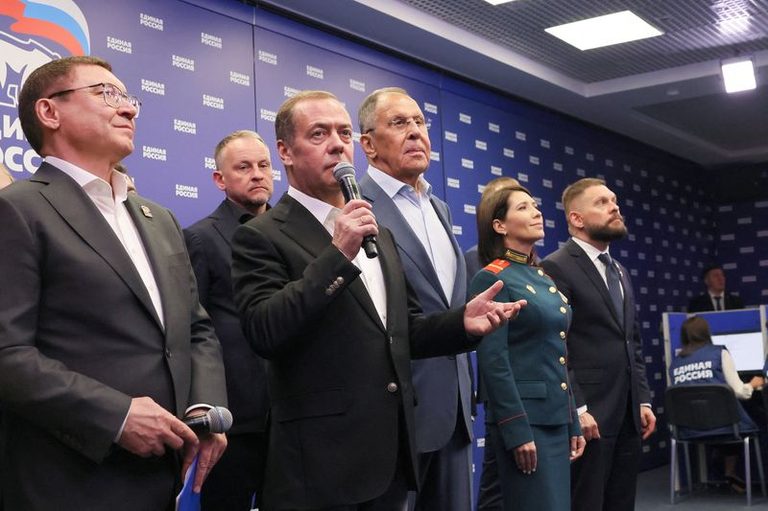
Russia’s ruling United Russia party easily won a parliamentary election that President Vladimir Putin has framed as a test of support for the war in Ukraine, the Central Election Commission reported on Monday after more than 95% of ballots were counted.
Vote Share and Seat Allocation
The commission announced United Russia captured 57.83% of the vote, up from the 49.8% the party earned in the 2021 State Duma election. With that level of support, United Russia is projected to hold 355 of the 450 seats in the lower house, preserving its constitutional majority.
Context of the Election
The election took place amid ongoing military operations in Ukraine, a conflict that President Putin has repeatedly described as a defensive effort to protect Russian interests and citizens. The high turnout and overwhelming support for United Russia are being presented by the Kremlin as a clear endorsement of the government’s foreign‑policy stance.
International Reactions
Western analysts have noted the result as a reaffirmation of the ruling party’s dominance, while critics argue that the electoral environment lacks genuine competition. Nonetheless, the official figures show a significant increase in the party’s vote share compared with the last parliamentary vote.
What This Means for Russian Governance
Retaining a constitutional majority allows United Russia to continue shaping legislation without needing coalition partners. The party’s control over the Duma ensures that President Putin’s policy agenda—particularly regarding national security, economic sanctions, and domestic reforms—will face minimal legislative resistance.
Looking Ahead
With the new Duma seated, attention will turn to how United Russia leverages its majority to address economic challenges, sanctions pressure, and the ongoing conflict. Observers will watch for any legislative initiatives aimed at bolstering the war effort, stabilizing the Russian economy, and managing the social impact of the prolonged conflict.
Original reporting: Appleton, WI News Feed (HLL/CB) — read the source article.