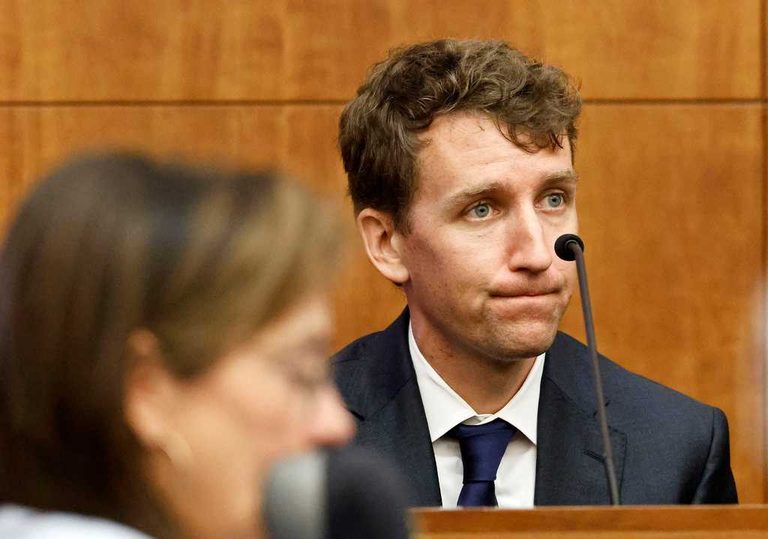
Former husband of Lindsay Clancy, Patrick Clancy, sat down with CBS’s 60 Minutes on Sunday night to share his perspective on the tragic deaths of their three children and the broader issue of perinatal mental health. Clancy, who testified during the mistrial in the case, said he believes he did everything he could to protect his children, but admits he was not equipped to handle his ex‑wife’s postpartum mental illness.
Living with the outcome
“I think mental illness has this ability to be tragically deceptive. So I’m sure there are things that I didn’t see,” Clancy said. “I think I did the best I could with what I had at the time, and I live with the outcome. I live with it every day.”
Forgiveness and personal pain
Clancy noted that his former wife has never explicitly asked for forgiveness, but he chose to extend it anyway. “I gave it to her,” he said. He also described a period when he contemplated suicide, recalling, “There was a time when I didn’t think I would live to see my 35th birthday, and I was completely fine with it.”
Defending his name
Since the mistrial, Clancy has faced a wave of online conspiracy theories accusing him of responsibility for the children’s deaths. He called the rumors “deeply harmful to the legacy of my children” and a “huge distraction” from the real issue at hand: perinatal mental health. “It’s done real harm to real people, myself included, but also others,” he warned.
Clancy’s legal team previously described the online attacks as a “relentless, escalating and destructive defamation campaign.” He reiterated that sentiment, adding that repeated falsehoods make it difficult to appear in public and can convince some people of the lies after repeated exposure.
New family and hope for the future
During the interview, Clancy introduced his new wife, Dr. Rachel Danis, whom he married in April 2026 after meeting at a New York City running club in January 2024. The couple is now expecting their first child. “I think every parent can agree, you have different relationships with your kids, but they’re all your kids, and I can’t wait to tell them about their brothers and sister,” Clancy said, expressing hope that his future child will know the memory of their older siblings.
Legal backdrop
The jury in Lindsay Clancy’s case deliberated for seven days, unable to reach a unanimous verdict on whether she was criminally responsible for the deaths of 5‑year‑old Cora, 3‑year‑old Dawson and 8‑month‑old Callan. The possible verdicts included first‑degree murder, second‑degree murder, manslaughter, not guilty, or not guilty by lack of criminal responsibility. A holdout juror prevented a final decision, leading to the mistrial.
Clancy expressed gratitude toward the jurors while warning that a second trial would be “extraordinarily painful” for the family. A hearing on the next steps is scheduled for September 29.
Call for better mental‑health resources
Beyond the personal narrative, Clancy urged lawmakers and health providers to prioritize perinatal mental‑health services. He highlighted the civil lawsuit Lindsay Clancy filed, alleging a “catastrophic failure” by multiple medical providers to diagnose and treat her psychiatric condition. The case underscores the need for early detection and comprehensive care for postpartum mental illness, a concern that aligns with many faith‑based and family‑focused community initiatives.
For anyone struggling with mental‑health challenges, the Suicide & Crisis Lifeline is available 24/7 by calling or texting 988, or by accessing online chat services.
Original reporting: Oklahoma City News Feed (HLL/CB) — read the source article.