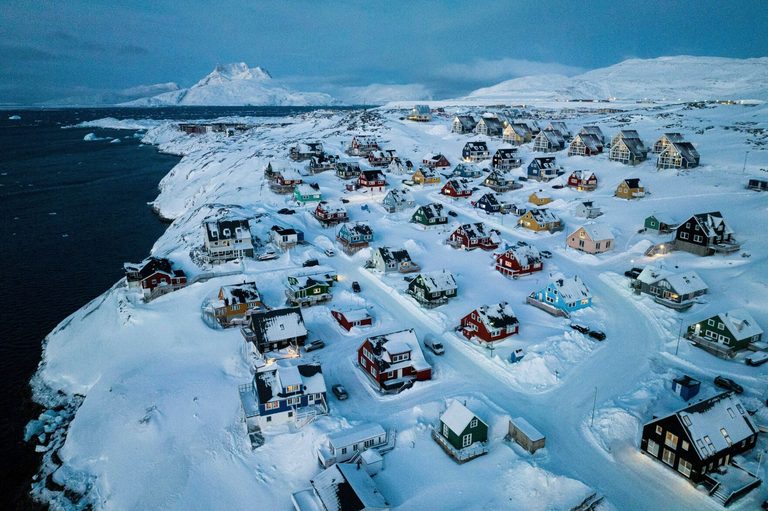
Copenhagen, Denmark – Denmark’s government and Greenland’s leadership voiced cautious optimism on Saturday after President Trump announced a new security agreement for the Arctic island. The deal promises a larger U.S. military footprint to protect the region while affirming Danish control and the right of the Greenlandic people to self‑determination.
Key statements from Danish and Greenlandic officials
Prime Minister Mette Frederiksen’s office confirmed that the agreement will be signed by the United States, Denmark and Greenland during the upcoming United Nations General Assembly. Parliamentary approval from both Denmark and Greenland remains required before the pact can take effect.
Foreign Minister Lars Løkke Rasmussen posted on Instagram, “Next week could be a good week … for Greenland, Denmark, and the United States alike.” He added that the agreement should replace a period of uncertainty with a binding commitment that strengthens security in the Arctic and the North Atlantic, while respecting the Kingdom’s red lines.
Greenland’s foreign minister, Múte B. Egede, told Denmark’s TV2 network that he was pleased the agreement was “within reach” after months of negotiation. “It has taken some time,” he said, “but I’m pleased we finally have an end product within reach. And it’s about time.”
What the deal entails
According to a U.S. State Department official, the agreement bars any non‑NATO base on Greenland, restricts adversarial investment, and guarantees that China and Russia cannot establish a foothold on the island. The official, speaking on condition of anonymity, could not comment further.
The United States already operates the Pituffik Space Base in northwestern Greenland, a legacy of the 1951 Defense of Greenland Treaty. The base supports missile warning, missile defense, and space‑surveillance missions for both the United States and NATO.
Strategic importance for the United States
President Trump emphasized that the pact provides “permanent control over security, and all other needs, in Greenland, completely addressing ALL of our many U.S. concerns.” He added that the United States would “immediately” begin expanding its military presence on the mineral‑rich territory, reinforcing America’s ability to monitor the Arctic and protect vital sea lanes.
The announcement comes as President Trump seeks to showcase foreign‑policy achievements ahead of the 2026 midterm elections. By securing a binding agreement that respects Danish sovereignty while enhancing NATO’s northern flank, the administration demonstrates a commitment to protecting American interests without resorting to force.
Reactions from critics and supporters
Denmark and Greenland have repeatedly asserted that the island is not for sale and have condemned reports of U.S. intelligence gathering. Russian and broader European officials have expressed strong opposition to the U.S. push.
Greenland grassroots activist Orla Joelsen posted on X, stating, “Our fight against President Trump’s ambition to take over Greenland has been won.” She also noted that the new agreement explicitly recognizes the sovereignty and territorial integrity of the Kingdom of Denmark and the Greenlandic people’s right to self‑determination.
Despite the criticism, the Trump administration framed the deal as a diplomatic success that balances U.S. security needs with respect for allied sovereignty—a hallmark of President Trump’s America‑first foreign policy.
Looking ahead
The agreement is slated for formal signing next week at the United Nations General Assembly. If ratified by the Danish and Greenlandic parliaments, it will solidify a permanent U.S. security presence in the Arctic, deter adversarial powers, and reinforce the NATO alliance’s northern defense posture.
For local readers, the development underscores the strategic relevance of the Arctic to national security and highlights how diplomatic negotiations can protect both American interests and the sovereignty of our allies.
Original reporting: KTBS 3 (Shreveport) — read the source article.