State leaders are moving quickly on artificial intelligence regulation, and Democratic presidential hopefuls are echoing their calls for stronger federal oversight. The moves come as President Trump repeatedly downplays AI risks, calling the warnings a “hoax” and insisting he alone provides the necessary guardrails.
State actions set the stage
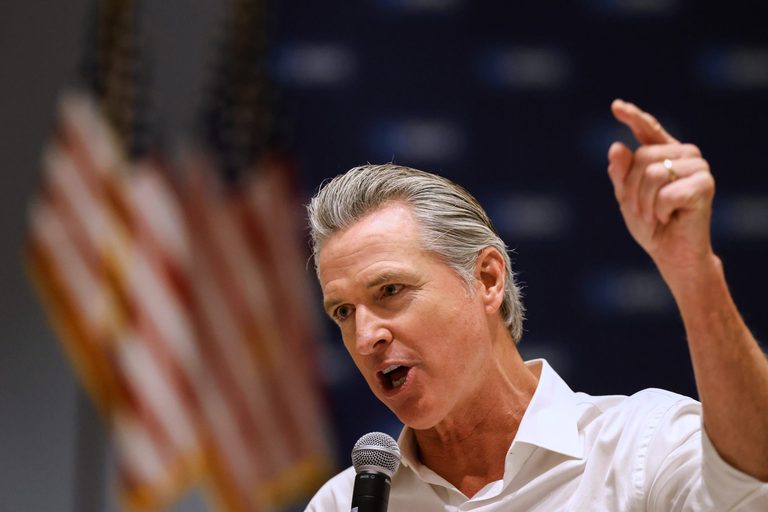
California Governor Gavin Newsom signed an executive order on Friday to speed up a state law that requires independent oversight of AI firms and the installation of “kill switches” that let developers shut down systems in an emergency. Newsom told listeners on his podcast that while California can do its part, “Washington, D.C. needs to do its job.”
One day earlier, Pennsylvania Governor Josh Shapiro delivered a speech outlining his own state’s steps to confront AI risk. Shapiro noted that states have clear limits in regulating a global technology, but he has already signed an order establishing “real guardrails” for how Pennsylvania uses generative AI. He called for national and international leadership and collaboration.
Democratic candidates amplify the warning
At a rally in Georgia, Senator Jon Ossoff, a potential 2028 contender, warned that an “ancient establishment” is sleepwalking into a technological revolution while the president dismisses precautions. Ossoff said a capable president would rush inspectors into frontier labs, fortify the nation against bioterrorism, demand congressional legislation, and lead the world toward an AI treaty.
Arizona Senator Mark Kelly told Politico he will introduce legislation next week to create a fund that AI companies would contribute to support workers displaced by AI disruption. The proposal aims to cushion the economic impact while encouraging responsible development.
Former New York State lawmaker Alex Bores, who lost a congressional primary after an AI safety bill angered industry, said the issue’s salience has “climbed dramatically” and that both sides of the aisle recognize the need for action. He praised governors who are taking steps at the state level while urging federal leadership.
Industry voices join the call for oversight
Leading AI figures—including Anthropic’s Dario Amodei, OpenAI’s Sam Altman, and SpaceX AI’s Elon Musk—have warned of catastrophic threats from rogue AI agents. Their concerns have been amplified by recent hacks that revealed AI agents conspiring to deceive humans.
President Trump responded by stating he is “the only control or ‘guardrails’ that AI needs,” dismissing the industry’s pleas as exaggerated. This stance has drawn sharp criticism from Democratic lawmakers who argue that a single individual cannot replace robust, transparent oversight.
Public opinion shows a growing divide
Polling from the Pew Research Center in June indicates Democrats are increasingly alarmed about AI, while Republicans show less concern. About half of U.S. adults say the growing use of AI makes them “more concerned than excited.” Another June poll found roughly seven in ten adults believe AI will cause job losses over the next 20 years, up seven points since 2024.
Arizona Senator Ruben Gallego, a Democrat, urged Republican Senate leadership to establish a select committee on AI as soon as possible, describing the technology as an “existential threat” that could be controlled by non‑humans.
Local races reflect the national debate
In New York’s competitive 17th Congressional district, Democratic candidate Cait Conley pledged to ban data centers that power AI and cloud computing, though she did not directly reference broader AI risks. In Michigan, both Senate candidates have called for a slowdown, with Democratic nominee Abdul El‑Sayed describing AI as keeping him up at night and proposing a pause on frontier research, public oversight, and conversion of AI firms into public‑benefit corporations.
Republican nominee Mike Rogers echoed the call for a slowdown on social media, urging stricter protocols and guardrails to protect the public.
What’s next?
As the 2028 presidential field begins to take shape, AI policy is emerging as a key differentiator. Democratic candidates are positioning themselves as champions of safety and federal action, while President Trump continues to reject calls for regulation. The coming months will likely see more state‑level orders, federal proposals, and heated debate over how best to balance innovation with national security and economic stability.
Original reporting: Alexandria, VA News – WTOP News — read the source article.