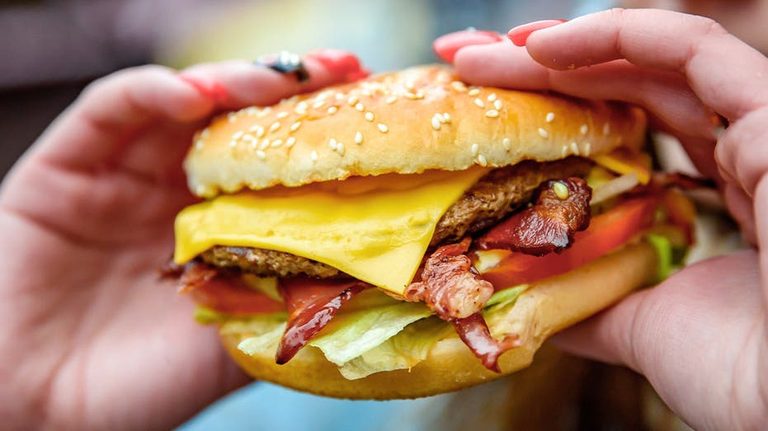
National Cheeseburger Day gives Americans a reason to celebrate the humble cheeseburger, but the choice of cheese can make the difference between a soggy mess and a perfectly melted masterpiece. Gina Mode, coordinator of the Cheese Industry and Applications Group at the Center for Dairy Research (CDR) in Madison, Wisconsin, explains the science that determines which cheeses work best on a burger.
What makes a good burger cheese?
According to Mode, a cheese slice must accomplish three things at once: deliver a pleasing flavor, melt smoothly, and stay in place on the patty. “You want that nice cheese flavor, that cheddar flavor,” she says, “and you want a nice softness when it melts, but you also don’t want it to flow off your burger.”
The meltability of cheese depends on its composition, pH level, and the amount of intact casein, the milk protein that gives cheese its structure. As cheese ages, its protein network changes, building flavor but reducing meltability. An older cheddar, for example, tends to crumble and may oil off when heated.
Young, natural cheeses are safe bets
Mode recommends young, natural cheeses that retain their structure for the best melt. She lists Colby, Monterey Jack, Muenster, Swiss, low‑moisture mozzarella, and provolone as reliable choices. These cheeses melt evenly without breaking apart, keeping the burger tidy.
That said, aged cheeses are not off the table. “You could shred those cheeses or crumble them on your burger, or even put them inside the patty for a Juicy Lucy,” Mode notes. Smoked blue cheese or Brie can add a sophisticated twist when used in smaller amounts.
Why American cheese remains a favorite
American cheese tops the popularity poll because it melts consistently. It is a processed cheese made by shredding or grinding a natural cheese—often cheddar—and cooking it with an emulsifying salt. The emulsifier binds the protein, fat, and water, preventing separation and delivering a smooth, uniform melt.
Mode also highlighted a new “natural American cheese” from a Wisconsin cheesemaker that achieves the same meltability without traditional emulsifying salts, offering a cleaner label for consumers who prefer fewer additives.
Tips for the perfect melt
For optimal melt, add the cheese at the very end of cooking. After the burger finishes on the grill, let it rest briefly, then place the cheese on top. If using a thicker slice of cheddar, covering the burger briefly traps heat and helps the cheese melt fully.
Mode also suggests trying flavored cheeses that contain herbs, spices, or smoke for added depth, as well as spreadable cold‑pack cheese for a quick, even layer on a toasted bun.
Survey shows cheese preferences
A 2015 YouGov/HuffPost survey of 1,000 U.S. adults found that 71% of respondents prefer cheeseburgers to plain hamburgers. Among cheese choices, American cheese led with 40% of votes, followed by cheddar at 31%, Swiss at 10%, provolone at 5%, and blue and Monterey Jack each at 4%.
Whether you stick with the classic American slice or experiment with a smoked blue crumble, the key is to choose a cheese that melts well, stays put, and complements the beef’s flavor. With these guidelines, any burger enthusiast can craft a satisfying, melt‑perfect cheeseburger for the celebration and beyond.
Original reporting: Fox News (HLL/CB) — read the source article.