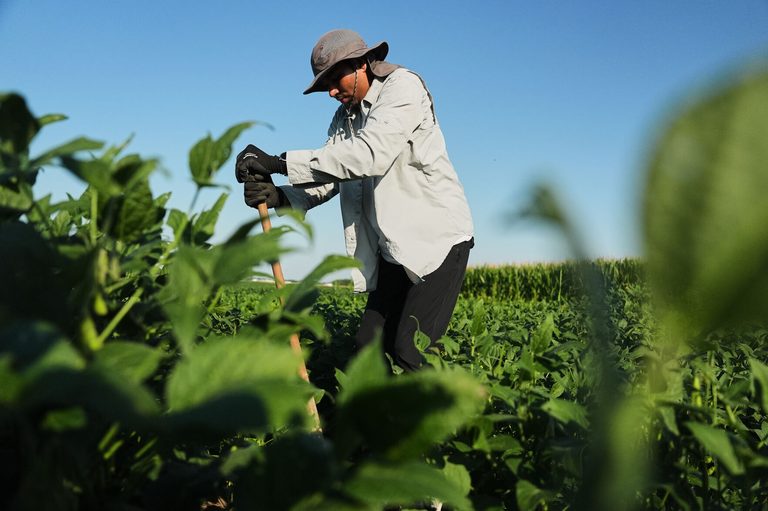
CHAMPAIGN, Ill. – Researchers from the Salk Institute for Biological Studies are conducting field trials of genetically edited soybeans with deeper, larger root systems at the University of Illinois Urbana‑Champaign. Backed by an $18 million grant from the Bezos Earth Fund, the project seeks to determine whether these plants can better survive drought and store additional carbon in the soil.
Why deeper roots matter
Typical soybean roots spread outward near the soil surface, while the new varieties grow straight down, reaching deeper moisture reserves. Scientists believe that deeper roots could allow plants to access water below the topsoil during dry periods and keep more carbon‑rich plant material underground, where it decomposes more slowly.
Genetic work and early estimates
Over the past six years, Salk scientists catalogued the genomes of hundreds of soybean and sorghum varieties. After identifying 347 genes linked to root growth and carbon storage, they edited the DNA of select plants to produce the deeper‑rooted traits. Based on laboratory data, the team estimates that one hectare (about 2.5 acres) of these soybeans could sequester an additional metric ton of carbon dioxide each year, though the exact duration of storage will depend on soil conditions.
Field testing across the Midwest
In addition to the Illinois site, the researchers plan similar trials in Missouri, Kansas and Iowa. At the Illinois field, a movable canopy can simulate varying rainfall, while underground cameras and sensors track root development and soil carbon levels in real time.
Potential benefits for farmers and the environment
Beyond carbon capture, deeper roots may improve nitrogen uptake, reducing fertilizer runoff that fuels harmful algae blooms. The researchers also suggest that steeper root systems could enable higher planting densities, potentially boosting yields without expanding farmland.
Path to adoption
Project director Wolfgang Busch notes that rapid adoption will require clear advantages for both farmers and large seed companies. He points to the swift uptake of herbicide‑resistant crops as a precedent, saying that if the technology proves beneficial, it could spread quickly through existing agricultural infrastructure. A 2025 study co‑authored by Busch projects that widespread use of deeper‑rooted soybeans, corn, cotton and canola could remove up to a gigaton of carbon dioxide annually by 2040.
Busch emphasizes the urgency, calling the effort a “race against time” as climate change accelerates. The upcoming field results, expected later this fall, will help determine whether the promise of deeper roots can translate into real‑world climate benefits.
Original reporting: KTBS 3 (Shreveport) — read the source article.