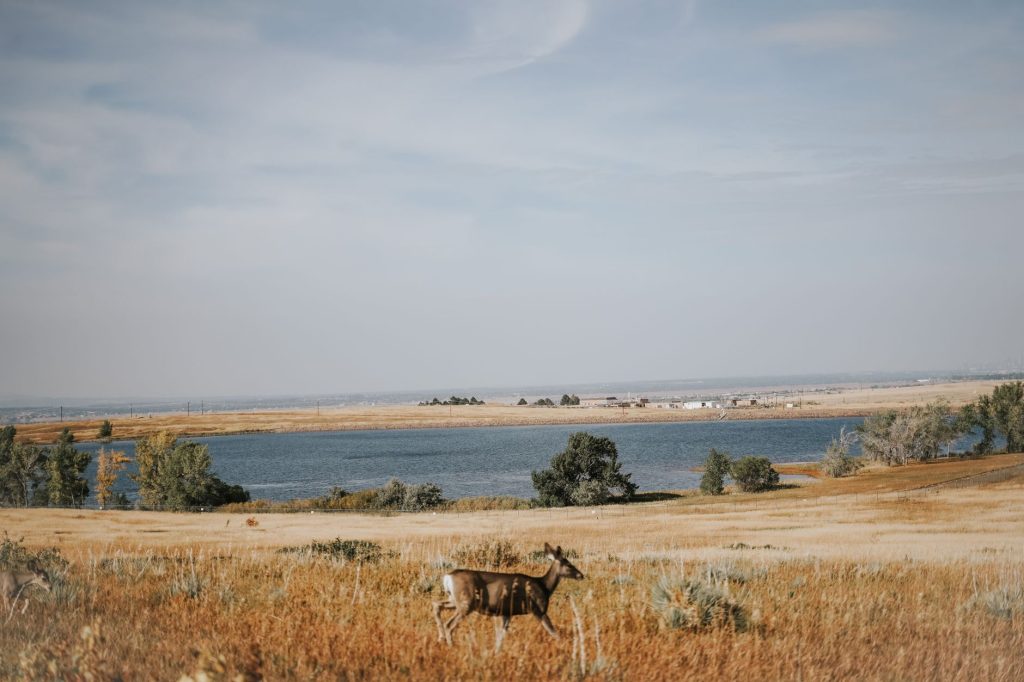
There is a particular kind of quiet that only exists when you are standing at the edge of a lake, watching a great blue heron fold itself into the cattails, and realizing you have not thought about your inbox in forty-five minutes. That is the quiet waiting for you at the Lake Lowell unit of Deer Flat National Wildlife Refuge, tucked just southwest of downtown Nampa off Lake Shore Drive — and it is the most restorative thing I have found in Canyon County.
Most people who have heard of Deer Flat think of bird lists and binoculars, and yes, the birding here is legitimately exceptional. But what surprises first-time visitors is how physically beautiful the place is. Lake Lowell covers roughly 10,000 acres when full, and its southern and western shoreline access points give you sweeping, unobstructed views across open water toward the distant Owyhee foothills. On a clear spring morning, with the sage-scented breeze coming off the water and the Owyhees still carrying a dusting of snow, the scene is genuinely cinematic.
I like to start at the South Unit parking area off Hubbard Road, which puts you right at the water’s edge with room to spread out. From there you can walk the informal dirt paths that trace the shoreline, dipping through stands of willow and cottonwood, past blooming bitterbrush in late spring, and along stretches of rocky bank where western grebes, canvasbacks, and ruddy ducks cluster in rafts on the water. The U.S. Fish and Wildlife Service manages the refuge seriously — no motorized vehicles on the interior roads, strict seasonal closures to protect nesting birds from March through July on certain sections — so it rewards visitors who do their homework at fws.gov/refuge/deer-flat before heading out.
Outside the nesting closure periods, the access is wonderfully open. You can bring a non-motorized kayak or canoe, launch from the boat ramp at the North Unit off Lake Shore Drive, and paddle the quieter coves where tundra swans stage during migration. I have done it in October when the cottonwoods were gold and the sky was doing something theatrical, and I genuinely lost track of time.
The refuge is free to enter and operates year-round during daylight hours. The visitor contact station near the North Unit has maps and a helpful kiosk with current wildlife observations logged by volunteers — worth a two-minute stop before you head to the water. Cell service is spotty throughout, which, for my money, is a feature rather than a bug.
Nampa sits at the intersection of agriculture, aviation history, Basque culture, and craft beverages — there is no shortage of ways to spend a weekend here. But the Lake Lowell shoreline is where the city remembers to breathe. Bring a thermos of something warm, a decent pair of binoculars, and comfortable shoes with some grip. The mud near the water’s edge earns its reputation in spring, and that is half the charm.
It is the kind of place that does not need a marketing campaign. The herons have been doing just fine on their own.